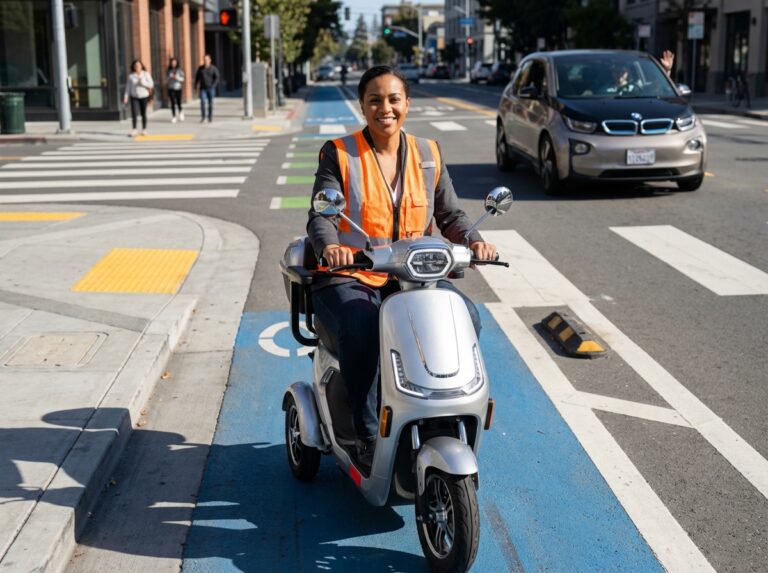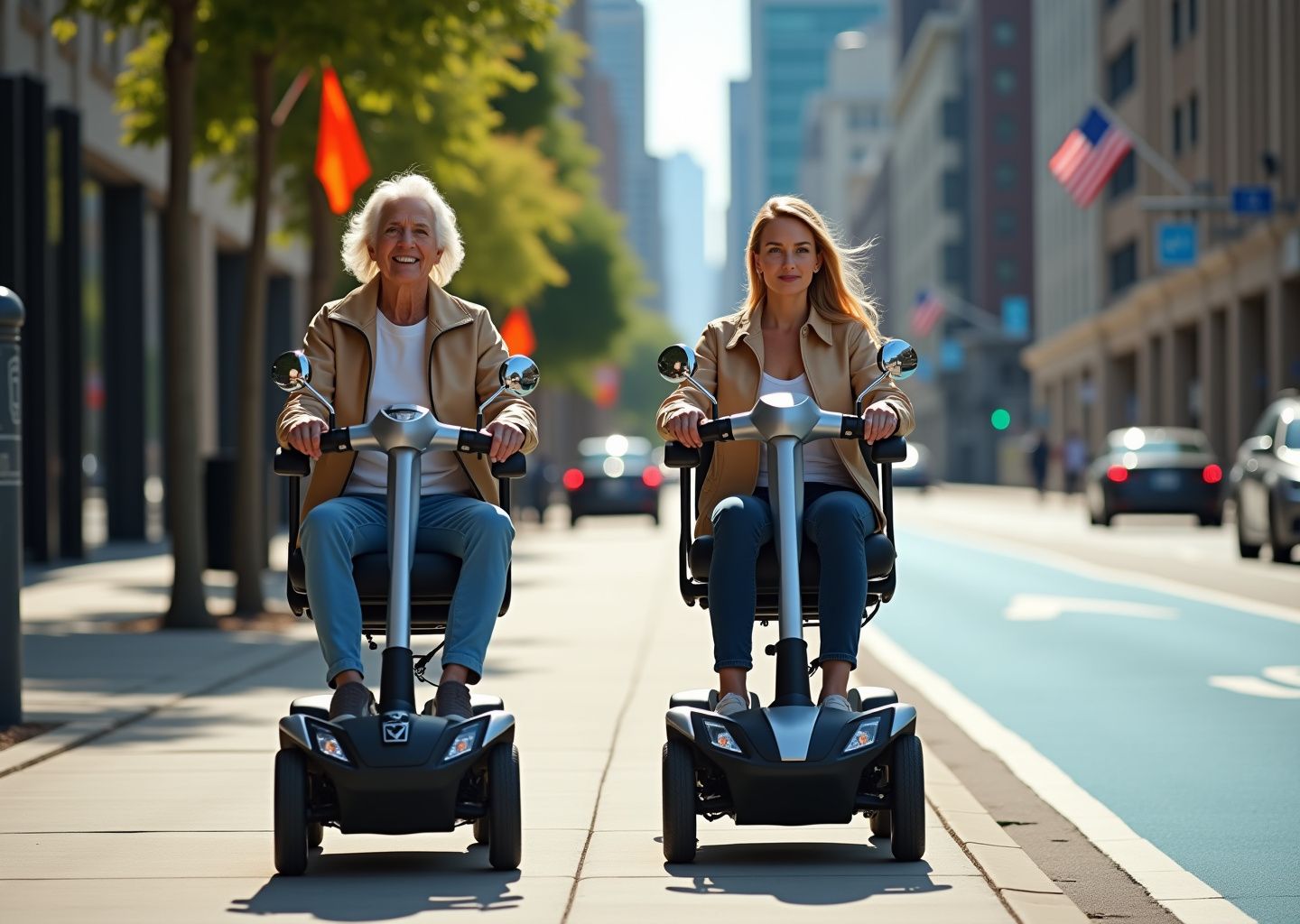
This guide explains how mobility scooters are treated under U.S. law and gives a practical plan to compile accurate state-by-state rules for 2025. Learn key federal guidance, the legal items to check in each state, common variations to expect, and how to stay safe with battery care, maintenance, and the best accessories.
Understanding Mobility Scooters and Legal Definitions
Navigating the world of mobility scooters starts with understanding exactly what they are and, just as importantly, what they are not. At its core, a mobility scooter is an electrically powered mobility aid, an extension of a wheelchair, designed for individuals who have difficulty walking long distances. But the legal landscape is far more nuanced, and how a device is classified can dramatically change where you can ride it, whether you need to register it, and even how you can acquire it.
Defining the Devices You’ll Encounter
The term “scooter” is used for many different products, so let’s clear up the confusion. The devices relevant to mobility laws are quite distinct from the rental e-scooters you see on city streets.
Three- and Four-Wheel Mobility Scooters
These are the most common types and are what most people picture when they hear “mobility scooter.” They are designed for stability and ease of use.
- Three-wheel models offer a tighter turning radius, making them excellent for indoor use in homes or grocery stores. They typically have a top speed of around 4-5 mph and support weights up to 300 pounds.
- Four-wheel models provide superior stability, especially on uneven outdoor terrain like sidewalks, parks, and paths. They often have slightly higher top speeds (up to 8 mph), larger batteries for more range, and higher weight capacities, sometimes exceeding 400 pounds.
Power Chairs
Often confused with scooters, power chairs (or electric wheelchairs) are functionally different. They are controlled with a joystick rather than a tiller-style handlebar. This design allows for exceptional maneuverability, often with a zero-degree turning radius, making them ideal for users with limited upper body strength or those who spend most of their day in the device, especially indoors.
Electric Personal Assistance Mobility Devices (EPAMDs)
This is a broader legal category that can sometimes include mobility scooters, but it often encompasses devices like Segways. EPAMDs are typically defined by having two non-tandem wheels and being self-balancing. State laws for EPAMDs can be inconsistent, and their classification can sometimes create legal gray areas for mobility scooter users if the local statutes are not written clearly.
How Mobility Aids Differ from Recreational Scooters
It is critical to distinguish mobility devices from recreational ones, as their legal treatment is entirely different.
Shared Electric Kick Scooters
These are the app-based rental scooters found in many cities. They are built for general transportation, not medical necessity. As a result, they are subject to traffic laws similar to bicycles. They often have top speeds of 15-20 mph, are frequently banned from sidewalks, and may have helmet and age requirements. You can learn more about these specific rules in this guide to U.S. electric scooter laws.
E-Bikes
Electric bicycles are equipped with pedals and an electric motor for assistance. They fall into different classes based on their top speed (which can be up to 28 mph) and whether they have a throttle. Like kick scooters, they are regulated as vehicles, not mobility aids, and must follow road rules.
Why Legal Classification Is Everything
The way your state or city legally classifies your mobility scooter directly impacts your freedom of movement. This classification determines your rights and responsibilities.
Access to Sidewalks and Public Spaces
Under the Americans with Disabilities Act (ADA), mobility scooters are generally considered “power-driven mobility devices” (PDMDs), granting users access to pedestrian areas like sidewalks, shopping malls, and parks. However, if a state’s traffic code classifies a scooter as a “motor vehicle,” it could theoretically be banned from sidewalks, creating a conflict between federal disability rights and local traffic law. This is the central issue our state-by-state guide will explore.
Registration and Licensing
Because true mobility scooters are considered medical aids, they almost never require a driver’s license, registration, or insurance. They are treated like pedestrians. In contrast, devices that are faster or classified as motor vehicles may require all three, just like a moped or motorcycle.
Standards, Safety, and Getting Your Scooter
Beyond traffic laws, there are standards that ensure these devices are safe and regulations that can help you afford one.
Standards and Certification Bodies
Organizations like the Rehabilitation Engineering and Assistive Technology Society of North America (RESNA) and the American National Standards Institute (ANSI) develop standards for mobility devices. These standards cover durability, stability, and electrical system safety. A device that meets ANSI/RESNA standards has been rigorously tested, giving you confidence in its quality and performance.
Medical Status and Insurance Coverage
A mobility scooter can be classified as Durable Medical Equipment (DME) if it is deemed medically necessary by a doctor. When a physician provides a prescription, it opens the door for coverage through Medicare, Medicaid, or private health insurance. This process requires specific documentation about your medical condition and mobility needs. Without this DME classification, a scooter is typically an out-of-pocket expense. The next chapter will delve deeper into the federal rules governing Medicare and DME procurement.
When choosing a mobility scooter, your primary consideration should be your lifestyle. Think about where you will use it most. Will you be navigating tight indoor spaces, or do you need a rugged device for outdoor paths? Will you need to transport it in a car? Answering these questions will help you decide between a portable travel model, a nimble three-wheeler, or a robust four-wheel scooter, ensuring the model you pick truly enhances your independence.
Recommended SEO Keywords: mobility scooter laws 2025, mobility scooter classification, power chair vs mobility scooter, Durable Medical Equipment (DME) scooter, EPAMD laws, mobility scooter speed limit, RESNA standards mobility device
Federal Guidance and National Standards Affecting Mobility Scooters
While state and local rules create a patchwork of regulations, a strong federal framework provides the foundation for your rights as a mobility scooter user. Understanding these national standards is key, as they often take precedence over local laws and affect everything from where you can ride to how you can travel with your device.
The Americans with Disabilities Act (ADA) Your Right of Access
The Foundation of Your Rights
The most important piece of federal legislation for any mobility scooter user is the Americans with Disabilities Act. The ADA ensures people with disabilities have equal access to public life. Under the ADA, your mobility scooter is generally considered a “power-driven mobility device” (PDMD). This classification is your golden ticket to accessing public spaces.
This means you have a federally protected right to use your scooter in places open to the public, such as government buildings, stores, parks, and hotels. Crucially, this right extends to sidewalks and pedestrian pathways. This is a powerful example of federal preemption, where a national law overrides a local one. If a town has an ordinance banning all “vehicles” from its sidewalks, the ADA ensures that your mobility scooter, as a necessary assistive device, is exempt from that rule. The core principle is that you must be allowed access unless your specific device poses a legitimate safety risk to others in that specific environment. A facility can consider factors like the device’s size, weight, and speed, but they cannot impose a blanket ban on all scooters.
Your Rights in Private Businesses
Title III of the ADA guarantees you access to places of “public accommodation,” which includes stores, restaurants, hotels, and doctor’s offices. A business must allow you to use your mobility scooter unless your device poses a direct threat to the health or safety of others or cannot be accommodated due to legitimate physical barriers. A business cannot deny you entry based on a general “no scooters” policy. If your disability is not obvious, staff may only ask two questions: 1) “Is the scooter required because of a disability?” and 2) “What work or task has the device been trained to perform?” They cannot ask you about your specific disability.
National Highway Traffic Safety Administration (NHTSA) What It Doesn’t Cover
You might see the NHTSA mentioned in relation to vehicle safety, but its authority generally does not extend to mobility scooters. The NHTSA regulates “motor vehicles” intended for use on public roads. Because mobility scooters are classified as medical devices or PDMDs under the ADA, they fall outside this scope. This is why your scooter doesn’t come with the same safety features as a car, like airbags or turn signals mandated by federal law. It also means there are no federal registration or licensing requirements for mobility scooters as there are for cars or motorcycles. This distinction is vital; it keeps your device in the category of personal mobility assistance rather than a recreational or transport vehicle.
Medicare and Medicaid Getting Your Scooter Covered
For many, a mobility scooter is a medical necessity, and federal programs like Medicare can help cover the cost. Under Medicare Part B, a mobility scooter is classified as Durable Medical Equipment (DME). To qualify for coverage, you must meet specific criteria and follow a strict process.
- Medical Necessity is Key You must have a medical condition that makes it very difficult to move around inside your own home to perform daily living activities. This is a critical point; Medicare covers scooters primarily for in-home use, not for getting around town.
- Doctor’s Orders You need a face-to-face examination with your doctor, who must then write a detailed prescription. This prescription must clearly state that a scooter is medically necessary for you.
- Documentation Requirements Your doctor and the DME supplier will need to provide extensive documentation to Medicare. This typically includes the doctor’s notes from your exam, a completed Certificate of Medical Necessity (CMN), and proof that other, less-involved mobility aids like a cane or walker are not sufficient for your needs.
Medicaid rules vary by state but often follow similar principles of medical necessity. Always work with a reputable DME supplier who is approved by Medicare to ensure all paperwork is filed correctly.
Traveling with Your Scooter FAA and DOT Battery Rules
Taking your scooter on a plane or shipping it involves rules from the Federal Aviation Administration (FAA) and the Department of Transportation (DOT), primarily concerning the batteries.
- Lithium-Ion Batteries These are common in modern, lightweight scooters. The FAA has strict rules based on the battery’s Watt-hour (Wh) rating. Generally, if the battery is non-removable, it can stay installed. If it is removable, you must take it out and carry it with you in the cabin. There are limits on the size and number of spare batteries you can bring. Always check your airline’s specific policy well before your flight.
- Lead-Acid Batteries Many larger scooters use non-spillable sealed lead-acid batteries. These are generally considered less hazardous. For air travel, the battery can often remain in the scooter, but you will likely be required to disconnect the terminals and secure them to prevent a short circuit.
When shipping a scooter, DOT regulations for hazardous materials apply. Your shipping company will guide you on proper labeling and packaging, especially for lithium batteries.
Finding and Citing Federal Rules
Staying informed means knowing where to find the official source material. When you need to verify a rule or advocate for your rights, citing the correct regulation is powerful. Here’s how to find them:
- Start with Official Websites The best sources are government websites. For disability rights, the primary source is ADA.gov. For Medicare rules, use CMS.gov. For air travel, visit FAA.gov.
- Use Specific Search Terms When searching, use official terms. For example, search for “power-driven mobility device ADA” or “Medicare durable medical equipment scooter” to get the most relevant results.
- Citing a Regulation Federal regulations are organized in the Code of Federal Regulations (C.F.R.). A proper citation looks like this: 28 C.F.R. § 35.137. This refers to Title 28, Section 35.137 of the code. Finding the exact citation number adds authority to any communication you might have with a business or local agency.
These federal guidelines provide a baseline of rights and rules that protect you across the country. In the next sections, we will explore how each state builds upon this federal foundation with its own specific laws.
How to Build a State-by-State Legal Entry and What to Check
To create a reliable and easy-to-understand state-by-state guide, we need a consistent method for researching and presenting the information. State laws can be a tangled web of vehicle codes, administrative rules, and local ordinances. What makes it even more confusing is that many states haven’t written laws specifically for mobility scooters. Instead, they often fall under broader categories. This template is designed to cut through that confusion and build a clear, accurate entry for every state.
Your goal for each state is to answer a core set of questions. By following this structure, you’ll create a comprehensive resource that helps riders understand their rights and responsibilities. Always remember the key distinction, mobility scooters, as medical devices, are often governed by different rules than recreational electric scooters, even if the statutes don’t always make that clear.
The Essential Checklist for Each State Entry
For every state, you must research and document the following eleven points. This structured approach ensures no critical detail is missed and provides readers with a consistent experience across the guide.
-
Legal Classification
This is the most important piece of information, as it dictates most other rules. Look for how the state defines your device. Is it a “power-driven mobility device” (PDMD), an “electric personal assistive mobility device” (EPAMD), a “motorized wheelchair,” or is it simply treated as a pedestrian? Some states may incorrectly lump it in with “motorized scooters” or have no specific classification, in which case federal ADA guidelines often take precedence. -
Registration Requirements
Does the state require you to register your mobility scooter with the Department of Motor Vehicles (DMV) or another agency? For true mobility scooters used for a disability, the answer is almost always no. However, you must verify this, as some states have confusing laws based on motor wattage or speed capabilities. -
Driver Licensing and Age Restrictions
Confirm if an operator needs a driver’s license, a special permit, or must meet a minimum age requirement. Again, for ADA-recognized mobility devices, this is highly unlikely, but it is a critical point to confirm in the state’s vehicle code. -
Where Scooters Are Permitted
Detail exactly where a user can legally operate their scooter. This includes sidewalks, crosswalks, bike lanes, and public roads. If road use is permitted, note any restrictions, such as being limited to roads with a posted speed limit of 25 mph or less. This is where the legal classification becomes very practical. -
Maximum Legal Speeds
While most mobility scooters have a top speed of 4-8 mph, check if the state imposes a specific speed limit for devices operating on sidewalks or in pedestrian areas. Often, the rule is a common-sense guideline, such as “a speed that is reasonable and prudent” for the conditions. -
Equipment Requirements
List any legally mandated equipment. This typically includes lighting and reflectors for nighttime operation. Note if helmets are required. While helmets are rarely mandatory for mobility scooter users, it’s crucial to check, as some laws written for e-scooters might inadvertently apply. -
Insurance and Liability
Is liability insurance required to operate a mobility scooter? Generally, it is not. However, it’s useful to note common practices, such as whether personal liability may be covered under a homeowner’s or renter’s insurance policy. -
Penalties and Fines
What are the consequences of violating these rules? Research potential fines for infractions like operating on a prohibited roadway, riding recklessly, or operating without required lights at night. This information is often found in the penalty sections of the state vehicle code or in municipal ordinances. -
Notable Municipal Exceptions or Preemption Rules
State law is not always the final word. Many large cities have their own ordinances for mobility devices. Note if state law allows cities to set their own, stricter rules (preemption). Research the rules for at least one major city in the state to provide a practical example. -
Primary Source Citations
To ensure trust and accuracy, every piece of legal information must be cited. Link directly to the official source. This could be a specific page on the state’s DMV website, a direct link to the state legislature’s website showing the statute, or a link to a municipal code. Format citations clearly, for example, California Vehicle Code § 415. -
Last-Checked Date and Recommended Update Cadence
Laws change. At the bottom of each state’s entry, include a “Last Updated” date. We recommend reviewing and updating each state’s laws at least twice a year, or quarterly if possible, given the rapid evolution of personal mobility regulations.
Structuring Each State’s Entry
Each state profile should have two parts, a quick summary for easy scanning and a detailed explanation for those who need more information.
Sample Short-Form Summary (Example)
Florida: Mobility scooters are generally treated as pedestrian devices, allowing full access to sidewalks and crosswalks. No registration, license, or insurance is required for operators using them as a mobility aid.
Sample Explanatory Paragraph (Example)
Under Florida Statutes, a mobility scooter used by a person with a disability typically falls under the definition of a “motorized disability access vehicle” or is treated with the same rights as a pedestrian. This classification is critical because it legally separates them from recreational “motorized scooters,” which are banned from sidewalks. As a pedestrian device, you can operate your scooter on sidewalks and in crosswalks throughout the state. You are not required to register it with the Florida Highway Safety and Motor Vehicles (FLHSMV), nor do you need a driver’s license. While there is no state-mandated speed limit for sidewalk use, operators must yield to other pedestrians and travel at a safe speed. For nighttime use, a front-facing white light and rear-facing red reflector are recommended for safety, though not always explicitly required by statute for pedestrian devices.
Source: Florida Statutes § 316.003, FLHSMV Mobility Device Guide. Last Updated: January 15, 2025.
Taxonomy and URL Structure for Organization
To keep the guide user-friendly and optimized for search engines, use a consistent structure.
-
URL Structure: Use a clean, predictable URL for each state page. For example, `www.ourwebsite.com/mobility-scooter-laws/florida/`.
-
Internal Linking: Create a main guide page with a table that lists all 50 states. Each state name should link directly to its detailed page. This helps users navigate easily and shows search engines how your content is structured.
-
Consistent Headings: Use the same headings within each state’s page (e.g., “Where You Can Ride,” “Registration and Licensing,” “Equipment Rules”). This creates a familiar pattern for readers and allows for the use of anchor links for quick navigation within longer pages.
Notable State Variations and Example Profiles to Check in 2025
While federal ADA law provides a crucial baseline for mobility scooter rights, the day-to-day rules you’ll encounter can change significantly when you cross a state or even a city line. Understanding these variations is key to riding with confidence. The most common differences fall into a few key patterns. Some states explicitly classify mobility scooters as pedestrian devices, granting them access to sidewalks and crosswalks by default. Others have broader categories like “Electric Personal Assistive Mobility Devices” (EPAMDs) which might come with specific speed limits. A recurring theme is the confusion between medical mobility scooters and recreational electric scooters; laws written for the latter sometimes create ambiguity for users of the former. Always watch for states that restrict sidewalk use in busy commercial districts or those that empower local municipalities to set their own rules. This local control means the regulations in a city’s downtown could be completely different from the suburbs. While registration is extremely rare for ADA-compliant mobility scooters, a few localities have experimented with voluntary permit programs, especially in large retirement communities.
To give you a practical sense of these differences, we’ve researched the rules in five key states. These profiles reflect the legal landscape as of late 2025 and are designed to show you what to look for in your own state.
California
California law makes a very clear distinction between mobility scooters used for disabilities and recreational electric scooters. Your mobility scooter falls under the protections of the ADA, treating you as a pedestrian. This means you have the right to use sidewalks, crosswalks, and other pedestrian areas. The state’s strict rules for recreational e-scooters, such as the 15 mph speed limit, helmet requirements for riders under 18, and a ban on sidewalk riding found in the California Vehicle Code (CVC §21235), do not apply to you as a mobility scooter user. This distinction is vital. For an everyday rider, it means you can confidently use your scooter on a sidewalk in Los Angeles or San Francisco without worrying about the regulations that govern rental scooters. However, you are still expected to operate at a safe speed for pedestrians and yield the right-of-way. There have been no major legislative changes in 2025 affecting ADA-protected devices, but some cities like Santa Monica have increased signage to clarify which devices are allowed on crowded boardwalks and paths.
Source: California DMV, U.S. Mobility Scooter Laws, CVC Division 11, Chapter 1. Last Checked: December 2025.
Florida
Florida is home to many mobility scooter users, and its laws are generally permissive, aligning closely with the ADA. The state legally defines a mobility scooter user as a pedestrian, which grants you access to sidewalks and public spaces statewide. Florida Statutes § 316.003 defines “motorized disability access vehicle” separately from other vehicles, ensuring these rights. This is great news for riders, as it provides consistency whether you’re in Miami, Orlando, or The Villages. Unlike its laws for recreational e-scooters, which are treated like bicycles and banned from most sidewalks, your mobility device is welcome. The key for riders in Florida is to practice courtesy and safety. You must yield to other pedestrians and operate at a walking pace in congested areas. Some planned communities or private developments may have their own rules regarding storage or pathways, so it’s always good to check local community guidelines. As of 2025, the state legislature has not introduced any bills that would restrict these established rights.
Source: Florida Highway Safety and Motor Vehicles (FLHSMV), Florida Statutes § 316.1303. Last Checked: December 2025.
Texas
Texas operates largely under “home rule,” meaning the state sets a broad framework but gives cities significant power to regulate local transportation. For mobility scooter users, your rights are protected by the ADA, so you are considered a pedestrian. However, the experience can vary between cities. In dense urban centers like Austin or Dallas, you might find local ordinances that specify speed limits on sidewalks in downtown districts or require you to use audible signals when passing. These rules are aimed at managing congestion from all forms of micro-mobility but can impact you. For example, an ordinance might limit sidewalk speeds to 4 mph in a specific entertainment district. The Texas Transportation Code is less specific about mobility devices than other states, leaving interpretation up to municipalities. This means a rider needs to be more aware of local signage and city ordinances than in states with more uniform laws. Always check the municipal code for the specific city you are in.
Source: Texas Department of Motor Vehicles, Texas Transportation Code, Chapter 551. Last Checked: December 2025.
New York
In New York, your mobility scooter is classified as an “electric personal assistive mobility device” (EPAMD) under state law, which legally separates it from recreational e-scooters and grants you pedestrian rights. This allows you to operate on sidewalks and in crosswalks across the state. The situation becomes more complex in New York City, which has its own extensive set of rules for transportation devices. While NYC’s strict ban on sidewalk riding for e-scooters and its 15 mph speed cap do not apply to your mobility scooter, the sheer volume of foot traffic means you must operate with extreme caution. Riders in NYC should expect to move at a slow walking pace and be prepared to navigate crowded, narrow sidewalks. The NYPD has been known to enforce rules against reckless operation of any device, so yielding to pedestrians is not just a courtesy but a legal necessity. A 2025 city initiative has focused on clearing sidewalks of obstructions, which benefits scooter users but also comes with heightened awareness of how devices are used in public spaces.
Source: New York State DMV, NY Vehicle and Traffic Law (VTL) § 114-d. Last Checked: December 2025.
Illinois
Illinois law provides clear protections for mobility scooter users by defining them as “motorized wheelchairs,” a category exempt from vehicle registration, licensing, and insurance requirements. Under this classification, you are afforded the rights of a pedestrian and can legally operate on sidewalks, in crosswalks, and on public property. The Illinois Vehicle Code (625 ILCS 5/1-148.3m) solidifies these protections. However, the state gives municipalities the authority to regulate sidewalk traffic. In Chicago, for example, while your right to use the sidewalk is protected, you are expected to exercise due care and adhere to the flow of pedestrian traffic, especially in high-traffic areas like the Loop or along the lakefront paths. Some suburban communities may have their own local ordinances regarding the use of mobility devices in parks or on specific trails. For the everyday rider, this means your rights are secure statewide, but it pays to be aware of local rules that may govern speed and etiquette in busy public areas.
Source: Illinois Secretary of State, Illinois Vehicle Code (625 ILCS 5/). Last Checked: December 2025.
Practical Rules for Safe Riding Maintenance and Best Accessories
Understanding the laws is one thing, but applying them to your daily rides is what truly keeps you safe and confident. Think of your mobility scooter as an extension of you as a pedestrian. This mindset is the key to navigating sidewalks, crosswalks, and public spaces smoothly and legally.
From Law to Pavement: Your Daily Riding Rules
Let’s translate the legal framework into simple, actionable habits for every trip you take.
Yielding is Your Superpower
Always give pedestrians the right of way. You are faster and heavier than someone on foot, so it’s your responsibility to be courteous and cautious. When approaching people from behind on a sidewalk, slow down and give a gentle verbal notice like “excuse me” or use your scooter’s horn well in advance. Never assume they hear you coming.
Master Your Speed
Your scooter has a throttle for a reason. While the typical top speed is around 4-8 mph, you should rarely be using it on a busy sidewalk. Match your speed to the flow of pedestrian traffic. A good rule of thumb is to travel no faster than a brisk walking pace in crowded areas. Save higher speeds for clear, open paths or when you are in a designated bike lane, if your local laws permit.
Crossing Streets with Confidence
Use designated crosswalks and pedestrian signals whenever possible. Before entering the street, make eye contact with drivers to ensure they see you. Even if you have the signal, look both ways. Don’t dart out from between parked cars; position yourself where you are most visible before you leave the curb.
Be Seen, Be Safe: Night and Low-Light Riding
Most states require some form of lighting for low-light conditions. Your scooter should be equipped with a front headlight and rear reflectors at a minimum. For maximum safety, use reflective tape on the sides and back of your scooter and wear bright or reflective clothing. It’s not about style; it’s about survival.
Accessorize for Safety and Convenience
The right accessories don’t just add comfort; they are crucial safety tools. Fortunately, most safety-enhancing accessories are legal nationwide.
- Mirrors: A set of rearview mirrors is essential for awareness. They help you see cyclists or pedestrians approaching from behind without having to turn your head constantly.
- Safety Flags: A tall, brightly colored flag makes you more visible to cars, especially in parking lots or when you are positioned lower than a car’s window line. Some local areas may have height recommendations, often around 5 feet, to ensure visibility.
- Upgraded Lights: While your scooter has basic lights, consider adding brighter, flashing LED lights to the front and back for superior visibility, especially during dawn, dusk, or in bad weather.
- Helmets: While not legally required for mobility scooter users in nearly all jurisdictions, a helmet is the single most effective accessory for preventing a serious head injury in a fall or collision. We strongly recommend wearing one on every ride.
- Phone Holders: A secure phone holder allows you to use GPS for navigation without taking your hands off the controls. Just remember, distracted driving rules can apply to you, too. Set your route before you start moving.
- Weather Covers: A simple canopy or vinyl cover can protect you and your scooter’s electronics from rain and sun, extending the life of your vehicle and making your ride more comfortable.
When buying accessories, prioritize durability and fit. Read reviews and ensure the product is compatible with your scooter model. A cheap accessory that breaks quickly is no bargain.
Battery Care: The Lifeline of Your Mobility
Your battery is the most critical and expensive component of your scooter. Proper care is non-negotiable for performance, longevity, and safety.
Understanding Your Battery: Lead-Acid vs. Lithium-Ion
Most scooters use one of two types. Sealed Lead-Acid (SLA) batteries are heavier and have a shorter lifespan (1-2 years with heavy use) but are less expensive upfront. Lithium-ion (Li-ion) batteries are lightweight, last much longer (3-5 years), and charge faster, but they come with a higher price tag. Your scooter’s manual will specify which type you have.
Charging Best Practices
- Always use the manufacturer-provided charger. Using an incompatible charger is a serious fire hazard.
- Avoid fully draining the battery. Charge it after each significant use.
- Don’t leave it on the charger indefinitely after it’s full. While most modern chargers have an auto-shutoff, it’s best practice to unplug it to prevent trickle-charging, which can degrade the battery over time. A full charge takes 8-12 hours for lead-acid and 4-6 for lithium.
- Charge your battery in a dry, well-ventilated area at a moderate temperature (ideally between 50-77°F).
Storage and Transport
For long-term storage (a month or more), store the battery with a charge of around 40-60%. Keep it in a cool, dry place. For air travel, the rules are strict. The Federal Aviation Administration (FAA) generally prohibits lithium-ion batteries over 100 watt-hours (Wh) in checked luggage. Most scooter batteries exceed this. You must carry on removable lithium batteries, and you must notify the airline in advance. Non-spillable lead-acid batteries may be allowed if they meet specific DOT packaging requirements. Always check with your airline weeks before your flight. For shipping, both battery types are considered hazardous materials by the Department of Transportation (DOT) and require special labeling and packaging.
End-of-Life and Recycling
Never throw an old battery in the trash. They contain toxic materials. Most battery retailers, electronics stores, or local recycling centers have certified battery recycling programs, such as those run by Call2Recycle or the Responsible Battery Recycling Corporation (RBRC).
Your Maintenance Checklist
Regular checks prevent small issues from becoming major, costly repairs.
Daily (Before Each Ride)
- Check tire pressure. Most are 30-50 PSI. Underinflated tires drain the battery faster.
- Test your brakes.
- Check that your lights and horn are working.
- Listen for any unusual noises.
Monthly
- Wipe down your scooter. Check for any loose nuts, bolts, or wiring.
- Inspect battery terminals for corrosion. Clean with a wire brush and baking soda paste if needed.
- Check tire treads for wear.
Annually
Schedule a professional service. A technician should inspect the motor brushes, bearings, brakes, and electrical system. This is especially important after about 500 hours of use.
If your scooter won’t start, first check that the battery is fully charged, the key is fully inserted, and the scooter is not in “freewheel” mode. If these simple checks don’t work, it’s time to consult your manual or call a professional.
Insurance, Warranties, and Accident Preparedness
Insurance and Warranty Notes
While not legally required by any state, insurance is a smart investment. A specialized mobility scooter policy can cover theft, damage, and most importantly, liability in case of an accident. Some homeowner’s or renter’s insurance policies may offer limited coverage, but it’s often not comprehensive enough for liability on the go. Always read your scooter’s warranty carefully to understand what is covered and for how long. Performing your own complex repairs could void it.
What to Do After an Accident
If you’re involved in an accident, your first priority is safety.
- Check for injuries and call 911 if anyone is hurt.
- If you can, move your scooter out of the way of traffic.
- Call the police to file an official report. This is vital for any insurance claim.
- Exchange contact and insurance information with anyone else involved.
- Use your phone to take pictures of the scene, any damage, and any visible injuries.
- If there are witnesses, ask for their names and phone numbers.
- Notify your insurance company as soon as possible.
Because you are considered a pedestrian in most situations, the laws governing pedestrian-vehicle incidents will likely apply. A police report is your most important document after an accident.
Quick Risk-Mitigation Steps
- Always assume drivers and pedestrians do not see you.
- Maintain a safe following distance from people in front of you.
- Slow down for corners, ramps, and uneven surfaces.
- Never operate your scooter under the influence of alcohol or medications that cause drowsiness.
SEO Keyword Suggestions
mobility scooter safety rules, mobility scooter battery care, how to charge a mobility scooter battery, mobility scooter maintenance checklist, flying with a mobility scooter, mobility scooter accessories, safe mobility scooter riding, mobility scooter laws 2025
Conclusions and Action Steps
Navigating the web of mobility scooter laws can feel overwhelming, but it boils down to a few key principles. The most important takeaway from our guide is that while federal ADA protections grant you fundamental access rights as a pedestrian, the specific rules of the road—or sidewalk—are a patchwork of state and local ordinances. The primary source of confusion often lies in the distinction between a mobility scooter, which is a medical device, and a recreational electric scooter. As of late 2025, we’re seeing a clear trend where cities and states are tightening rules for recreational scooters, and sometimes, mobility scooter users get caught in the confusion. Your responsibility is to know the rules for your specific device in your specific location. This ensures not only your safety but also helps maintain public support for these essential devices.
Empowered with this knowledge, your next step is to take action. Staying compliant and safe is an ongoing process, not a one-time task. Here’s how you can stay on top of the rules and ride with confidence.
Your Action Plan for Staying Informed and Safe
Verifying the laws that apply to you is simpler than it sounds. You just need to know where to look and what to ask.
How to Quickly Check Your State and Local Rules
Start at the state level and then drill down to your city or county. Laws can change, so verifying directly from the source is always the best approach.
- Visit Your State’s DMV Website. Go to your state’s official Department of Motor Vehicles (or Department of Transportation) website. In the search bar, use terms like “power-driven mobility device” (PDMD), “motorized wheelchair,” or “electric personal assistive mobility device.” Avoid using “scooter” alone, as that will likely bring up results for recreational or motor scooters. Look for pages that define these devices and outline where they can be operated.
- Search Your Municipal Code. Next, find your city or county’s official government website. Look for a link to its “municipal code” or “code of ordinances.” Use the same search terms you used on the DMV site. This is where you’ll find hyper-local rules, such as restrictions in parks, on boardwalks, or in specific downtown districts. If you can’t find it online, call your local city clerk’s office; they can point you in the right direction.
Printable Pre-Ride Checklist
Keep this list handy. You can save it to your phone or print it out and keep it with your scooter key. It covers the essentials for every trip.
- Legal Compliance Check
- Location Awareness. Am I allowed to ride on this specific path, sidewalk, or bike lane?
- Speed Check. Do I know the speed limit for this area? (Remember, it’s often slower on sidewalks than in bike lanes).
- Night Riding. If riding at dawn, dusk, or night, are my reflectors clean and my lights working? (Many areas legally require them).
- Safety and Maintenance Check
- Tire Pressure. Are my tires properly inflated? Proper inflation ensures better battery life and safer handling.
- Brake Function. Do my brakes engage smoothly and firmly?
- Battery Level. Is my scooter fully charged for the entire trip?
- Visibility. Is my safety flag attached and visible? Are my mirrors adjusted correctly?
- Emergency Contact. Do I have an emergency contact number and any necessary medical information stored on my phone or in my wallet?
Best Practices for Staying Updated
Laws evolve, so a yearly check-in is a smart habit.
- Annual Review. Once a year, revisit your state DMV and local municipal code websites to check for any changes. A good time to do this is at the beginning of the year when new laws often take effect.
- Subscribe for Alerts. Consider setting up a free Google Alert for phrases like “[Your City] mobility scooter laws” or “[Your State] PDMD rules.” You can also subscribe to newsletters from national and local disability advocacy organizations, as they often report on new legislation affecting accessibility.
A Note on Advocacy
If you find the rules in your area are unclear, outdated, or create unnecessary barriers, you have the power to advocate for change. Your local elected officials—city council members, county commissioners, and state representatives—are the ones who create these laws. A personal story is incredibly powerful. Write a polite email or make a brief phone call explaining your situation. For example, you could describe how an unclear sidewalk rule makes it difficult for you to safely visit your doctor or the grocery store. Frame your request as a way to improve safety and accessibility for all residents. Often, lawmakers are simply unaware of the real-world impact of these ordinances.
SEO Meta Description
Your final checklist for mobility scooter laws in 2025. Find your state’s rules, get a printable safety checklist, and learn how to stay updated.
Social Share Headlines
- Don’t get a ticket on your mobility scooter. Here’s your 3-step plan to check the laws in your town.
- Mobility Scooter Rules Changed in 2025. Are You Compliant? Our guide makes it simple.
- Your Ultimate Mobility Scooter Rider’s Checklist: Legal, Safety, and Smart Riding Tips for 2025.
This guide is your starting point for safe and legal mobility scooter use. Because laws are subject to change and interpretation, we encourage you to bookmark this page for future reference and sign up for our newsletter to receive important updates. If you ever face a complex legal issue, such as a citation or an access dispute, we strongly recommend consulting with a qualified legal professional who can provide advice tailored to your specific situation.
Sources
- The Ultimate Guide to U.S. Mobility Scooter Laws – Metro Mobility — An educational article about mobility scooter laws in the United States to help users navigate with confidence.
- Legal Guide: Can You Drive an Enclosed Mobility Scooter? – First Class Mobility — Explains that enclosed mobility scooters are generally legal under federal law, but specifics can vary by location.
- Mastering Mobility Scooter Regulations Across the States – Off-Grid Go — A breakdown of important aspects of mobility scooter regulations to help users stay informed and compliant.