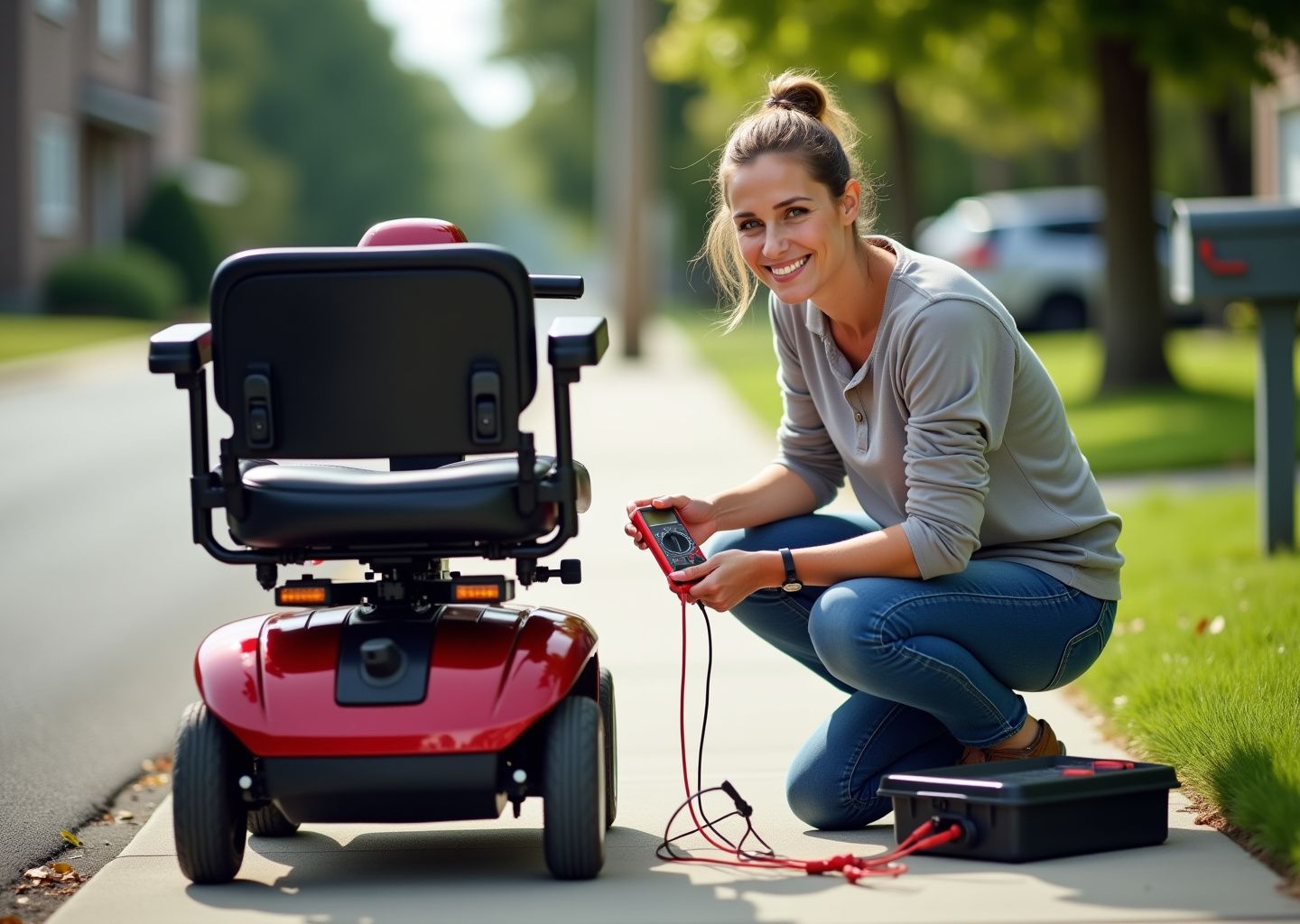
Facing a mobility scooter that won’t start is stressful and can threaten independence. This article walks through the seven most common causes — from battery and charger problems to safety switches and wiring — and gives practical fixes, preventive maintenance tips, and clear guidance on when to seek professional repair in the U.S. context.
Why a Mobility Scooter Might Refuse to Start
When your mobility scooter refuses to start, it can feel like your independence has been put on hold. That moment of turning the key and getting nothing in return is frustrating, but it’s often a problem you can diagnose, and sometimes even fix, right at home. Before we dive into specific issues, it’s helpful to understand the basics of how your scooter works and what its symptoms might be telling you.
In the United States, mobility scooters generally fall into a few categories. You have nimble 3-wheel models perfect for indoor maneuverability, stable 4-wheel models for outdoor confidence, lightweight travel or portable scooters designed to be easily disassembled for transport, and robust heavy-duty models built for higher weight capacities and more rugged terrain. While they look different, their core electrical systems are remarkably similar. Every scooter has a power source (the battery), a way to replenish it (the charger), a brain (the controller), a muscle (the motor), and a nervous system of switches and safety interlocks, including the ignition. Understanding this basic layout is the first step to troubleshooting.
Your scooter often gives you clues about what’s wrong. Learning to interpret these symptoms can help you narrow down the root cause quickly.
- No lights, no display, no sound.
This usually points to a total power failure. The problem is likely with the battery itself, the charger connection, or a main fuse or circuit breaker. - Lights and display turn on, but the motor won’t engage.
This means power is getting from the battery to the controller, but something is preventing it from reaching the motor. Common culprits are safety interlocks like the freewheel lever being engaged, the parking brake not being fully released, or a faulty throttle or brake switch. - Intermittent power or sputtering.
If the scooter starts and stops unpredictably, it often suggests a loose connection. This could be a wobbly battery terminal, a frayed wire in the harness, or a corroded connector. - A clicking or humming sound when you try to go.
This sound often means the motor is receiving power and trying to engage but is being stopped by something. The issue could be an engaged electronic brake or a problem within the motor or transaxle itself. - Error codes on a digital display.
Many modern scooters, like those from Pride Mobility, have self-diagnostic systems. A flashing light sequence or a specific error code on the display is the controller telling you exactly where it detects a fault. Your owner’s manual is your best friend here.
Before you touch a single wire, safety is paramount. Always follow this procedure. Turn the scooter completely off and remove the key from the ignition. Engage the parking brake to ensure it won’t roll. If you plan to inspect the battery terminals, it’s best to disconnect the main battery pack connector if your model allows. This prevents any accidental shorts that could damage the electronics or cause injury.
The age and model of your scooter can also provide hints. An older scooter that has seen years of use is more likely to suffer from a worn-out battery or corroded wiring, especially in humid climates. A brand-new scooter that won’t start may have a simple issue like a tripped circuit breaker from its first charge or a safety switch that wasn’t disengaged after shipping. Your warranty status is also a key factor. If your scooter is still under warranty, performing unauthorized repairs could void it, making a call to your dealer the smartest first move. In the U.S., manufacturers are held to high safety standards, partly due to ADA expectations, so safety interlocks are robust and should not be bypassed. The most common battery types you’ll encounter are Sealed Lead-Acid (SLA), known for their reliability and lower cost, and Lithium-ion, which are lighter and have a longer lifespan.
With these basics in mind, you can perform a quick at-home triage in about 10 to 30 minutes. Your initial diagnostic priorities should be the simplest things. First, check the battery’s state of charge and ensure the charger is completely unplugged from the scooter, as most have a safety feature preventing operation while charging. Next, inspect easy-to-access fuses and circuit breakers. Then, double-check all the safety switches. Is the freewheel lever in the “drive” position? Is the seat properly locked in place? Finally, do a quick visual inspection for any obvious damage to wiring. To do this effectively, it helps to have a small toolkit at home. A basic multimeter is invaluable for checking battery voltage and charger output. An insulated screwdriver set, a battery terminal brush, some dielectric grease for preventing corrosion, and a can of contact cleaner can solve many common connection issues.
This initial check-up will help you identify the most frequent and easily fixable problems. Now that you know how to approach the problem safely and systematically, we can explore the seven most common reasons your scooter won’t start and the specific steps to get you moving again.
Seven Common Causes and How to Fix Them
When your mobility scooter refuses to start, it can feel overwhelming. But often, the cause is one of a handful of common issues you can diagnose and sometimes fix yourself. Here’s a practical walkthrough of the seven most frequent culprits, from simple oversights to more complex electrical faults. Always remember to turn the scooter off and remove the key before starting any inspection.
1. Dead or Weak Battery
The battery is the heart of your scooter and the number one reason for starting failures. Even if the lights turn on, the battery might not have enough power to move the motor.
- Typical Symptoms: The scooter is completely dead with no lights or sounds. Alternatively, the display lights up, but the scooter won’t move, or it moves a few feet and dies. You might hear a clicking sound from the controller.
- Diagnostic Steps: Use a multimeter to check the battery pack’s voltage. A fully charged 24V Sealed Lead-Acid (SLA) system should read at least 25.2V at rest. If it’s below 23.6V, it’s critically low. For lithium packs, check the manufacturer’s specifications, but they generally hold a slightly higher voltage. A professional load test is best, but a simple check is to note the voltage, then turn on the headlights and horn. A drop of more than a volt or two indicates a weak battery.
- Step-by-Step Fix: If the voltage is low, fully charge the battery for 8-12 hours. If it still won’t hold a charge, it likely needs replacement. When replacing, disconnect the negative (black) terminal first, then the positive (red). Install the new battery by connecting positive first, then negative. Ensure you buy a compatible replacement with the same voltage and similar Amp-Hour (Ah) rating.
- Safety and Disposal: Wear gloves and eye protection. Lead-acid batteries are heavy and contain hazardous materials. In the U.S., you must recycle them. Most battery retailers will take your old batteries, or you can find a local hazardous waste facility or a service like Call2Recycle.
- DIY Difficulty: Easy
- Required Tools: Multimeter, wrench set.
- Estimated Cost: $150 – $350 for a pair of SLA batteries; $400 – $600+ for lithium. Professional installation adds $80 – $130 in labor.
- When to Call a Pro: If you’re uncomfortable handling batteries or if a new battery doesn’t solve the problem.
- Preventive Measures: Charge your scooter after every use. Don’t let the battery sit fully discharged for long periods. Expect to replace SLA batteries every 18-24 months with regular use.
2. Faulty Charger or Bad Charging Port
Sometimes the battery is fine, but the system that charges it is not. A faulty charger or a damaged port will prevent power from reaching the battery.
- Typical Symptoms: The scooter doesn’t charge when plugged in. The indicator light on the charger doesn’t turn on, stays green instead of turning red, or blinks incorrectly.
- Diagnostic Steps: First, check that the outlet works. Next, inspect the charger’s indicator lights; the manual will tell you what they mean. To test the charger itself, plug it into the wall (but not the scooter) and use a multimeter to test the DC output voltage at the connector pins. A 24V charger should output around 27-29V. If it reads zero or a very low voltage, the charger is likely dead. Also, inspect the scooter’s charging port for bent or broken pins.
- Step-by-Step Fix: If the charger is faulty, the only fix is a replacement. Do not buy a cheap, uncertified replacement; it can damage your batteries or create a fire hazard. Order an OEM or high-quality compatible charger from a reputable mobility dealer. If the port is damaged, it will need to be replaced by a technician.
- DIY Difficulty: Easy (for charger replacement)
- Required Tools: Multimeter.
- Estimated Cost: $50 – $150 for a quality replacement charger.
- When to Call a Pro: If the charging port is damaged or a new charger doesn’t fix the issue.
- Preventive Measures: Handle the charger and its cables with care. Don’t yank the cord from the wall or the scooter. Store it in a dry place.
3. Loose or Corroded Battery Terminals
A poor connection between the battery and the scooter’s wiring can mimic a dead battery. It’s a simple problem that’s often overlooked.
- Typical Symptoms: Intermittent power, a clicking sound with no movement, or a complete loss of power, especially after hitting a bump. The symptoms can be identical to a weak battery.
- Diagnostic Steps: Visually inspect the battery terminals. Look for loose nuts, frayed wires, or a white, crusty buildup (sulfation) on the posts. Wiggle the connectors gently to see if they are loose.
- Step-by-Step Fix: Disconnect the battery (negative first). Use a wire brush or a dedicated battery terminal cleaner to scrub any corrosion off the posts and connectors. Once clean, reconnect the terminals securely (positive first). Tighten the nuts to about 5-7 Nm with a torque wrench if you have one, or just “snug” tight. Applying a thin layer of dielectric grease or a terminal protector spray can prevent future corrosion.
- DIY Difficulty: Easy
- Required Tools: Wrench set, wire brush, dielectric grease (optional).
- Estimated Cost: Under $20 for cleaning supplies. Free if you already have the tools.
- When to Call a Pro: If the terminals or wires are severely damaged or broken.
- Preventive Measures: Inspect and clean terminals every six months, especially in humid climates.
4. Blown Fuse or Tripped Circuit Breaker
Fuses and circuit breakers are safety devices that protect the scooter’s electrical system from power surges. If one blows or trips, it cuts power.
- Typical Symptoms: The scooter suddenly loses all power and won’t turn back on. On some models, certain functions might work while others don’t.
- Diagnostic Steps: Consult your owner’s manual to locate the main fuse or circuit breaker. It’s usually near the battery pack or under the seat shroud. A circuit breaker often looks like a small button that pops out when tripped. Fuses are typically automotive-style blade fuses housed in a plastic holder. Visually inspect the fuse; a blown fuse will have a broken or melted metal strip inside.
- Step-by-Step Fix: If the circuit breaker is tripped, simply push the button back in to reset it. If a fuse is blown, pull it out and replace it with a new one of the exact same amperage rating. Using a higher-rated fuse is a serious fire hazard. If the breaker trips or the fuse blows again immediately, there is an underlying short circuit that needs professional diagnosis.
- DIY Difficulty: Easy
- Required Tools: Screwdriver, replacement fuses.
- Estimated Cost: $5 – $15 for a pack of fuses.
- When to Call a Pro: If the breaker or fuse repeatedly trips. This indicates a more serious electrical problem.
- Preventive Measures: Keep a few spare fuses of the correct rating with your scooter toolkit.
5. Safety Interlocks and Switches
Modern scooters have several safety switches that must be in the correct position to operate. These can include the key switch, seat switch, parking brake switch, and tiller lock.
- Typical Symptoms: The scooter’s display lights up, the battery is charged, but the motor won’t engage. You might see a specific error code or a flashing light sequence.
- Diagnostic Steps:
- Key/Ignition: Ensure the key is fully inserted and turned to the “on” position. Wiggle it slightly to check for a loose connection.
- Seat Switch: Make sure you are seated firmly. Some scooters require a certain amount of weight on the seat to activate.
- Parking Brake: Check that the manual parking brake is fully disengaged.
- Tiller Lock: Ensure the tiller is not in the folded or locked position.
- Step-by-Step Fix: Most issues are resolved by correcting the switch’s position. If a switch is faulty (e.g., the scooter only works when you wiggle the key), it needs to be replaced. Never bypass a safety switch. Doing so can lead to the scooter moving unexpectedly, causing serious injury.
- DIY Difficulty: Easy (for checking), Medium (for replacement)
- Required Tools: None for checking. Screwdriver and wrench for replacement.
- Estimated Cost: $20 – $70 for a replacement switch part. Professional labor would add $80+.
- When to Call a Pro: To replace a faulty switch, as it may require disassembling the tiller or seat components.
- Preventive Measures: Be mindful of all switches during normal operation. Keep the ignition area clean and dry.
6. Controller, Motor, or Wiring Faults
These are more serious electrical issues involving the scooter’s main components. Diagnosis and repair often require technical expertise.
- Typical Symptoms: A smell of burning plastic or ozone, visible smoke, a persistent error code that doesn’t clear, or the scooter is completely unresponsive despite a good battery and fuses.
- Diagnostic Steps: This is where DIY troubleshooting often ends. You can perform a basic visual inspection. Look at the wiring harness, especially around the controller and motor, for any signs of melted insulation, chafed wires, or loose connectors. If your scooter’s controller has diagnostic LEDs, check the manual for the fault code sequence. A basic motor check involves testing the resistance between the motor terminals with a multimeter (should be a low value, like 0.5-2 ohms), but this is an advanced step.
- Step-by-Step Fix: Repairs in this category are generally not for beginners. A loose connector can sometimes be re-seated, but replacing a controller, motor, or wiring harness is a complex job.
- DIY Difficulty: Hard (Professional Recommended)
- Required Tools: Multimeter, full tool set.
- Estimated Cost: Controller replacement can cost $300 – $800. Motor replacement can be similar. Labor will be significant.
- When to Call a Pro: Immediately if you see smoke or smell burning. Also call if you’ve ruled out all the simpler causes.
- Preventive Measures: Keep your scooter clean and dry. Avoid driving through deep puddles. Have your scooter professionally serviced annually to catch potential wiring issues early.
7. Human Errors and Environmental Causes
Sometimes, the scooter is perfectly fine, and the issue is a simple oversight or an environmental factor.
- Typical Symptoms: The scooter turns on but won’t move, or performance is severely reduced.
- Diagnostic Steps and Fixes:
- Freewheel Mode: Nearly all scooters have a lever that disengages the motor to allow the scooter to be pushed manually. If this lever is in the “freewheel” or “neutral” position, the motor will not engage. The scooter may power on, but it won’t drive. Locate this lever (usually a red or yellow handle near the rear wheels) and ensure it is firmly in the “drive” position.
- Extreme Cold: In temperatures below freezing (32°F), a battery’s output can be temporarily reduced by 20-50%. The scooter may seem weak or not start at all. The solution is to bring the scooter into a warmer environment and let the battery warm up before trying again.
- Water Intrusion: If the scooter was left out in heavy rain, water may have gotten into the electronics. Turn it off, remove the key, and let it dry in a warm, well-ventilated area for at least 48 hours before attempting to use it.
- Damaged Tires: A completely flat or seized tire can prevent the motor from turning, making it seem like a power issue. Do a quick visual check of the tires.
- DIY Difficulty: Easy
- Required Tools: None.
- Estimated Cost: Free.
- When to Call a Pro: If the scooter still won’t start after drying out or if the freewheel lever is stuck or broken.
- Preventive Measures: Always store your scooter in a dry, temperate location. Use a weatherproof cover if it must be left outside briefly. Always double-check the freewheel lever before riding.
Quick On-the-Spot Checklist
If your scooter stops working, run through these quick checks before doing anything else:
- Is the key fully in and turned to ON?
- Is the battery charger unplugged from the scooter?
- Is the freewheel lever in the DRIVE position?
- Is the circuit breaker button pushed in?
- Are you sitting firmly on the seat?
- Is the parking brake off?
- Does the battery gauge show a charge?
Step by Step Troubleshooting and Ongoing Maintenance
When your scooter refuses to start, a methodical approach can save you time, money, and frustration. Instead of guessing, follow this troubleshooting sequence, which moves from the simplest checks to more technical diagnostics. This process is designed to identify the most common issues first.
A Step-by-Step Troubleshooting Protocol
Before you begin, ensure your safety. Turn the scooter off, remove the key, and if possible, work on a flat, level surface. For any check involving the battery compartment, wear gloves and safety glasses.
- The 60-Second Visual and Switch Check. This first step resolves a surprising number of issues.
- Is the charger unplugged from the scooter? Most models have a safety feature that prevents them from starting while charging.
- Is the key turned fully to the ‘ON’ position? Sometimes it can get knocked into an intermediate position.
- Is the freewheel lever in the ‘DRIVE’ or ‘ENGAGED’ position? If it’s in ‘NEUTRAL’ or ‘FREEWHEEL’, the motor is disconnected from the wheels.
- Are any tiller locks or parking brakes fully disengaged?
- Is the seat positioned correctly? A loose or improperly seated seat can disengage the safety switch underneath it. Sit firmly in the center of the seat to ensure the switch is activated.
- Fuse and Circuit Breaker Inspection. If the visual check doesn’t work, the next step is to check the main power protection.
- Locate the circuit breaker, often a small push-button near the battery pack. If it has popped out, press it firmly back in. If it trips again immediately, you have a short circuit and should call a professional.
- Check the main fuse, typically located near the batteries. If the metal strip inside is broken, it’s blown. Replace it with a new fuse of the exact same amperage rating to avoid a fire hazard.
- Battery Voltage and Charger Check. This requires a multimeter, an essential tool for any scooter owner. Set it to DC Volts (V–).
- Test the Battery Pack. With the scooter off, touch the multimeter probes to the main positive and negative terminals of the battery pack. Compare your reading to the nominal voltage. A healthy, fully charged battery pack should read slightly above its rated voltage.
System Voltage Fully Charged (At Rest) Considered Weak (At Rest) 12V (rare) 12.6V+ Below 12.0V 24V (common) 25.2V+ Below 24.0V 36V 37.8V+ Below 36.0V 48V 50.4V+ Below 48.0V - Perform a Rudimentary Load Test. A low resting voltage indicates a problem, but a good resting voltage doesn’t guarantee a healthy battery. To perform a simple load test without professional equipment, keep the multimeter connected to the battery. Turn the scooter key on and activate the headlight. Watch the voltage reading. A healthy battery pack should not drop more than a volt or two. If it plummets significantly (e.g., a 24V pack drops to 20V), the batteries can no longer hold a charge under load and need replacement.
- Test the Charger. Unplug the charger from the wall and the scooter. Set your multimeter to DC Volts. Carefully insert the probes into the charger’s output connector. Plug the charger into the wall. The reading should be a few volts higher than your scooter’s system voltage (e.g., 27-29V for a 24V system). If you get no reading or a very low reading, the charger is likely faulty.
- Test the Battery Pack. With the scooter off, touch the multimeter probes to the main positive and negative terminals of the battery pack. Compare your reading to the nominal voltage. A healthy, fully charged battery pack should read slightly above its rated voltage.
- Wiring and Connector Inspection. With the power off and key removed, look at the battery terminals. Are they clean and tight? Check the main wiring harness connecting the batteries to the controller. Wiggle it gently. Does it feel secure? Look for any signs of melted plastic, frayed wires, or corrosion on the connectors.
- The Controlled Test Ride. If you’ve managed to get the scooter to power on, perform a short, slow test ride on a safe, flat surface. Listen for any unusual grinding or clicking sounds. Test the brakes and throttle response. If anything feels wrong, stop immediately and seek professional service.
Ongoing Maintenance for Peak Reliability
Preventing problems is always better than fixing them. A consistent maintenance routine will extend the life of your scooter and ensure it’s ready when you need it.
Battery Charging Best Practices
Charge your scooter’s batteries after every use, even short trips. This is especially critical for Sealed Lead-Acid (SLA) batteries. Avoid letting them fully discharge. If you’re storing the scooter for the winter in a cold garage, bring the batteries indoors where the temperature is between 40°F and 75°F. Before storing, charge them fully, then top them off once a month to maintain a healthy charge.
Seasonal Checklist for U.S. Climates
- Winter Prep: Check tire pressure, as cold air causes it to drop. Clean all battery terminals and apply a thin layer of dielectric grease to prevent corrosion from damp air. Store batteries in a temperature-controlled space if possible.
- Summer Prep: Clean dust and debris from the motor vents and controller housing to prevent overheating. Inspect tires for cracks or wear from hot pavement. Check that all lights and reflectors are clean and visible for longer days.
Cleaning, Lubrication, and Inspections
Once a month, wipe down your scooter’s frame and shroud with a damp cloth; never spray water directly onto the electronics. Check tire pressure on pneumatic tires. Test the brakes to ensure they engage smoothly. A small amount of silicone lubricant on the seat post swivel and a spray of electrical contact cleaner on the ignition switch can prevent sticking and ensure a good connection.
Essential Accessories and Maintenance Schedule
Investing in a few key accessories can make maintenance easier and improve safety. Consider an onboard voltmeter for at-a-glance battery health, a pack of spare fuses for your specific model, a quality weatherproof cover, and a smart charger that adjusts the charging cycle based on battery condition.
Sample Maintenance Schedule
- Daily (Before Each Ride): Quick visual check of tires, ensure tiller is secure, test horn and lights.
- Monthly: Check tire pressure with a gauge, test battery voltage with a multimeter, inspect battery terminals for corrosion, and wipe down the scooter.
- Annually: Schedule a professional service. A technician will check motor brushes, brake pads, bearings, and complex electrical components you can’t easily inspect.
Sample Maintenance Log
Keeping a simple log in a notebook helps you track your scooter’s health and can be invaluable for a technician.
Date: 12/26/2025
Battery Voltage (Resting): 25.5V
Tire Pressure (PSI): Front 35, Rear 35
Notes: Cleaned battery terminals. Scooter running smoothly.
When to Call a Professional
Know your limits. If you smell burning plastic, see smoke, hear grinding from the motor, or if a circuit breaker repeatedly trips, stop immediately. These indicate serious electrical or mechanical faults. For repairs under warranty, always contact the manufacturer or an authorized dealer first to avoid voiding your coverage. For out-of-warranty repairs, you can choose between a manufacturer-certified technician or a reputable independent mobility repair shop. To find a vetted technician in the U.S., look for professionals certified by organizations like the National Mobility Equipment Dealers Association (NMEDA). Always check online reviews and confirm they have experience with your scooter’s brand and model.
Frequently Asked Questions
Here are direct answers to some of the most common and urgent questions about a mobility scooter that won’t start.
How do I know if my mobility scooter battery is dead or if the charger is bad?
Use a multimeter to diagnose the issue. Test the battery pack directly; a healthy, fully charged 24V system should read over 25.2V. To test the charger, plug it into the wall and test its output connector. It should show a voltage a few volts higher than your scooter’s system voltage (e.g., 27-29V for a 24V system). If either test fails, you’ve likely found the culprit. Safety Note: Always handle multimeter probes carefully to avoid shorting the terminals.
Can I jump-start my mobility scooter like a car?
No, you should never jump-start a mobility scooter. Its sensitive electronic controller can be permanently damaged by the sudden surge of power from a car battery. This can lead to a very expensive repair, far more than the cost of a new battery. Safety Note: Attempting to jump-start your scooter can create sparks and damage the entire electrical system.
Is it safe to ride my scooter with a weak battery?
It is not recommended. A weak battery can die suddenly, leaving you stranded far from home. It can also cause the scooter to perform unpredictably, with reduced speed and power, which can be dangerous when navigating inclines or crossing streets. If your battery gauge shows low power, charge it fully before your next trip. Safety Note: Relying on a weak battery increases the risk of being stranded in an unsafe location.
How long should a fully charged mobility scooter battery last?
This depends heavily on the model, battery type (SLA vs. lithium), your weight, and the terrain. On average, a new, fully charged battery can provide a range of 10 to 30 miles. Hilly areas, rough surfaces, and frequent stops will reduce this range. Check your owner’s manual for the expected range for your specific scooter model. Safety Note: Always plan your trips based on a conservative estimate of your battery’s range to avoid running out of power.
Can I charge my scooter battery indoors?
Yes, charging indoors is generally safe and often recommended, especially during cold weather. However, you must ensure the area is well-ventilated. While modern sealed batteries produce minimal gas, it’s a good precaution. Never charge near flammable materials or in a tightly enclosed space like a closet. Safety Note: Always use the manufacturer-provided charger and ensure good airflow to prevent overheating.
My scooter clicks but won’t move. What should I do?
A clicking sound is a common issue. First, check that the freewheel lever (which disengages the motor) is fully in the “drive” position. Second, ensure the parking brake is completely disengaged. The click you hear is often the brake solenoid engaging, but a safety interlock is preventing the motor from turning. Safety Note: Make sure the scooter is on a level surface before disengaging and re-engaging the freewheel lever.
Will extreme cold damage my scooter’s battery?
Extreme cold (below 32°F or 0°C) won’t permanently damage a healthy battery, but it will temporarily reduce its capacity and range significantly. The battery will regain its normal performance once it returns to a warmer temperature. To prevent issues, store your scooter and charge the batteries in a space that stays above freezing. Safety Note: Never charge a frozen battery, as this can cause permanent damage. Let it warm up to room temperature first.
How do I find an authorized service center or warranty repair in the USA?
The best place to start is the official website of your scooter’s manufacturer, such as Pride Mobility or Golden Technologies. They usually have a “Dealer Locator” tool to find authorized service centers near you. For a broader search, the National Mobility Equipment Dealers Association (NMEDA) provides a directory of certified technicians who are qualified to perform repairs and warranty work. Safety Note: Using an unauthorized repair shop could void your scooter’s warranty.
Final Results and Next Steps for Safe Riding
We’ve covered a lot of ground, from the silent frustration of a key turn that does nothing to the specific error codes flashing on your display. A non-starting scooter can feel overwhelming, but with a clear plan, you can regain control and get back to your life.
Let’s quickly recap the journey. We explored the seven most common reasons your mobility scooter won’t start:
- Dead or Faulty Battery: The number one cause, responsible for the vast majority of starting issues.
- Charger Problems: A faulty charger can leave you with a dead battery, even when you think it’s charging.
- Blown Fuses or Tripped Breakers: These small safety devices are often the first to go during a power surge.
- Loose or Corroded Connections: A weak link in the electrical chain, from battery terminals to wiring harnesses.
- Ignition Switch or Key Issues: Physical wear or damage can prevent the “start” signal from ever being sent.
- Safety Interlocks Engaged: Features like the freewheel lever, seat sensor, or parking brake can prevent a startup if not correctly set.
- Controller or Motor Failure: The brain and the muscle of your scooter; while less common, failures here are more serious.
Remember that the solution is often simple. Before calling a technician, focus on the primary culprits: the battery’s charge and connections, the position of safety switches like the freewheel lever, and the status of the main fuse or circuit breaker. A methodical check of these basics resolves the vast majority of starting problems.
When to DIY and When to Call a Pro
Knowing your limits is the most important safety tool you have. While checking a fuse is simple, attempting to rewire a controller is not. Your personal safety and the integrity of your scooter are paramount. Always remember to disconnect the battery before performing any work beyond a simple visual check, and wear protective gloves and eyewear when handling batteries.
Here is a simple decision tree to guide you. Stop troubleshooting and call a certified technician immediately if you notice any of these red flags:
- You smell burning plastic or wires. This indicates a serious electrical short that could lead to a fire.
- You see smoke coming from the controller, motor, or battery compartment.
- The scooter displays persistent error codes that do not clear after you’ve checked the basics.
- You have performed all the initial checks—battery is charged, fuses are good, connections are clean, freewheel lever is engaged—and the scooter still shows no signs of life.
- The scooter’s housing is cracked or damaged in a way that exposes internal wiring or components.
Bypassing safety interlocks or attempting complex electrical repairs without proper training can lead to a runaway scooter, further damage, or personal injury. It is never worth the risk.
Your Immediate Next Steps for a Safe Resolution
Feeling stuck? Don’t be. Follow this clear, four-step plan to move forward efficiently and safely.
- Perform the 10-Minute Triage: Go through the basic checklist one more time. Key on, charger off, freewheel lever in drive, circuit breaker reset. Sit firmly in the seat. This simple sequence solves a surprising number of issues.
- Record Symptoms and Scooter Information: Before you make a call, write everything down. What happens when you turn the key? Are there any lights, beeps, or clicks? What were you doing before it stopped working? Locate the serial and model number sticker on your scooter’s frame, usually on the base near the rear wheels. This information is vital for support.
- Contact Manufacturer or Warranty Support: If your scooter is still under warranty, your first call should be to the manufacturer or the dealer you purchased it from. They will guide you through warranty-approved repair options. Unauthorized repairs can void your warranty.
- Book a Certified Technician: If you’re out of warranty or need hands-on help, it’s time to find a professional. Look for technicians certified by organizations like NMEDA (National Mobility Equipment Dealers Association) to ensure they are qualified. You can often find a local authorized dealer through your scooter brand’s website, such as Pride Mobility or Golden Technologies. For more general troubleshooting advice, resources like California Mobility’s troubleshooting guide can offer additional perspective.
A mobility scooter that won’t start is a frustrating hurdle, but it doesn’t have to mean the end of your freedom and mobility. By understanding the common causes, performing simple checks, and knowing when to call for help, you are in full control of the situation. Regular maintenance, careful battery care, and the right accessories will dramatically reduce the chances of being stranded. Your independence is precious, and with a smart, proactive approach, you can ensure your scooter remains a reliable partner in your daily life for years to come.
References
- Mobility Scooter Not Starting? Troubleshooting Tips — The most common issues related to mobility scooter issues are motors, batteries, tires, the potentiometer, and the ignition switch. Adopting a …
- How to Fix a Mobility Scooter That Won't Start — Common Mobility Scooter Problems · 1. Check the Key is ON: · 2. Ensure the Battery Charger is Unplugged: · 3. Verify the Scooter Isn't in Neutral ( …
- What to Do When Your Mobility Scooter Won't Start After Rental — Common Reasons Why Your Mobility Scooter Won't Start · 1. Battery Issues – · 2. Ignition Problems – · 3. Motor Faults – · 4. Brake Problems – …
- 5 Most Common Mobility Scooter Problems And How To Fix Them — The most common cause of mobility scooter breakdowns is the battery. With constant charging and discharging, scooter batteries lose their ability to hold charge …
- 10 Common Mobility Scooter Problems — Common Mobility Scooter Problems · 1. Battery Issues · 2. Motor Issues · 3. Flat/Worn Tires · 4. Ignition Switch Failures · 5. Armrests/Upholstery · 6 …
- Mobility Scooter Troubleshooting Guide & Common Fixes — Ignition issues can prevent a mobility scooter from starting. Exposure to the elements can cause gradual corrosion, leading to key sticking or complete breakage …
- Troubleshooting Wheelchair and Scooter Problems – NMEDA — Mobility Scooter – the most common issue with these types of vehicles is that the batteries are not up to a full charge. If you are …
- Common Mobility Scooter Issues Every User Should Know — These problems in mobility scooters can stem from various factors, including misaligned wheels, worn tires, and loose steering components. All …
- Common Problems With Mobility Scooters (+ Fixes) | Ideas In Action — Common Problems With Mobility Scooters · Battery · Tyres · Ignition Switches · Motors · Potentiometer · Mobility Scooter Maintenance and Repairs.
- Troubleshooting Your Mobility Scooter or Powerchair — There are several reasons why a mobility scooter/powerchair may fail to operate – but the first thing to check is the battery.
Legal Disclaimers & Brand Notices
This content is provided strictly for informational and educational purposes. It is not intended to serve as professional technical advice, diagnosis, or a substitute for repair services performed by a certified mobility equipment technician or the scooter manufacturer.
Attempting Do-It-Yourself (DIY) repairs on complex electrical or mechanical systems, such as those found in mobility scooters, carries inherent risks, including the potential for personal injury, electrical shock, fire hazards, and permanent damage to the equipment. Furthermore, performing unauthorized repairs may void your scooter’s existing warranty. Always consult your scooter’s owner’s manual and contact an authorized dealer or certified professional before attempting any complex troubleshooting or component replacement.
All product names, logos, and brands mentioned in this article, including but not limited to Pride Mobility, Golden Technologies, NMEDA, and Call2Recycle, are trademarks or registered trademarks of their respective owners. Their use in this article is for identification purposes only and does not imply any affiliation with, endorsement by, or certification from the trademark holders.