This guide explains legitimate ways U.S. residents can obtain a free or low-cost mobility scooter through insurance, veterans benefits, state programs, and nonprofit grants, while also covering model selection, safety rules, battery care, maintenance checklists, and top accessories. Read on for step-by-step application tips, documentation samples, and practical advice to secure mobility and stay safe on the move.
Paths to Getting a Free or Low-Cost Mobility Scooter
Finding a way to pay for a mobility scooter often feels like navigating a maze of paperwork. Many U.S. residents assume these devices are entirely out of reach due to their high price tags. However, several legitimate pathways exist to obtain a scooter at little or no cost if you meet specific medical and financial criteria.
Medicare Part B and Power Mobility Devices
Medicare Part B covers power mobility devices as durable medical equipment (DME). To qualify, you must have a medical condition that causes significant difficulty moving around your home. Medicare is very strict about the “in-home” requirement. If you only need a scooter for grocery shopping or trips to the park, they will likely deny the claim. You must demonstrate that you cannot perform mobility-related activities of daily living like bathing or dressing even with the help of a cane or walker.
The process starts with a face-to-face examination with your doctor. The physician must document your physical limitations in detail. They need to explain why a manual wheelchair is not sufficient and why a scooter is the best solution. If Medicare approves the request, they typically pay 80 percent of the approved amount. You or your supplemental insurance would cover the remaining 20 percent.
It is important to note that for many power mobility devices, Medicare utilizes a “capped rental” system. This means they pay a monthly fee for 13 months. After 13 months of continuous use, the title of the equipment transfers to you. It is vital to use a supplier that is enrolled in Medicare. If the supplier is not “participating,” they can charge more than the Medicare-approved amount.
Medicare Advantage Plan Variations
Medicare Advantage plans must provide the same basic coverage as original Medicare. However, these private plans often have their own networks of suppliers. You might be required to use a specific brand or a specific vendor. Some Advantage plans offer extra benefits that original Medicare does not. This might include lower co-pays for equipment. Always check your plan’s Evidence of Coverage document. You should call your plan provider directly to ask about their prior authorization process. This step is mandatory before you order any equipment.
Medicaid and State Waiver Programs
Medicaid coverage for mobility scooters varies significantly from state to state. Most states cover them if they are medically necessary for use in the home. However, unlike Medicare, many Medicaid programs recognize the need for mobility in the community. This means Medicaid might cover a scooter to help you get to a job or go to the grocery store. Many people access these devices through Home and Community-Based Services waivers. These programs are designed to help seniors and people with disabilities live independently rather than in a nursing facility.
Eligibility for Medicaid is based on both income and functional need. In some states, the process involves an assessment by a social worker or a nurse. They will visit your home to evaluate your environment to ensure a scooter can fit through your doorways. Be aware that Medicaid is state-specific. If you move to another state, coverage does not transfer automatically; you must re-apply in your new state. If you are eligible for both Medicare and Medicaid, Medicare pays first and Medicaid may cover the remaining 20 percent of the cost.
Veterans Affairs Prosthetic Services
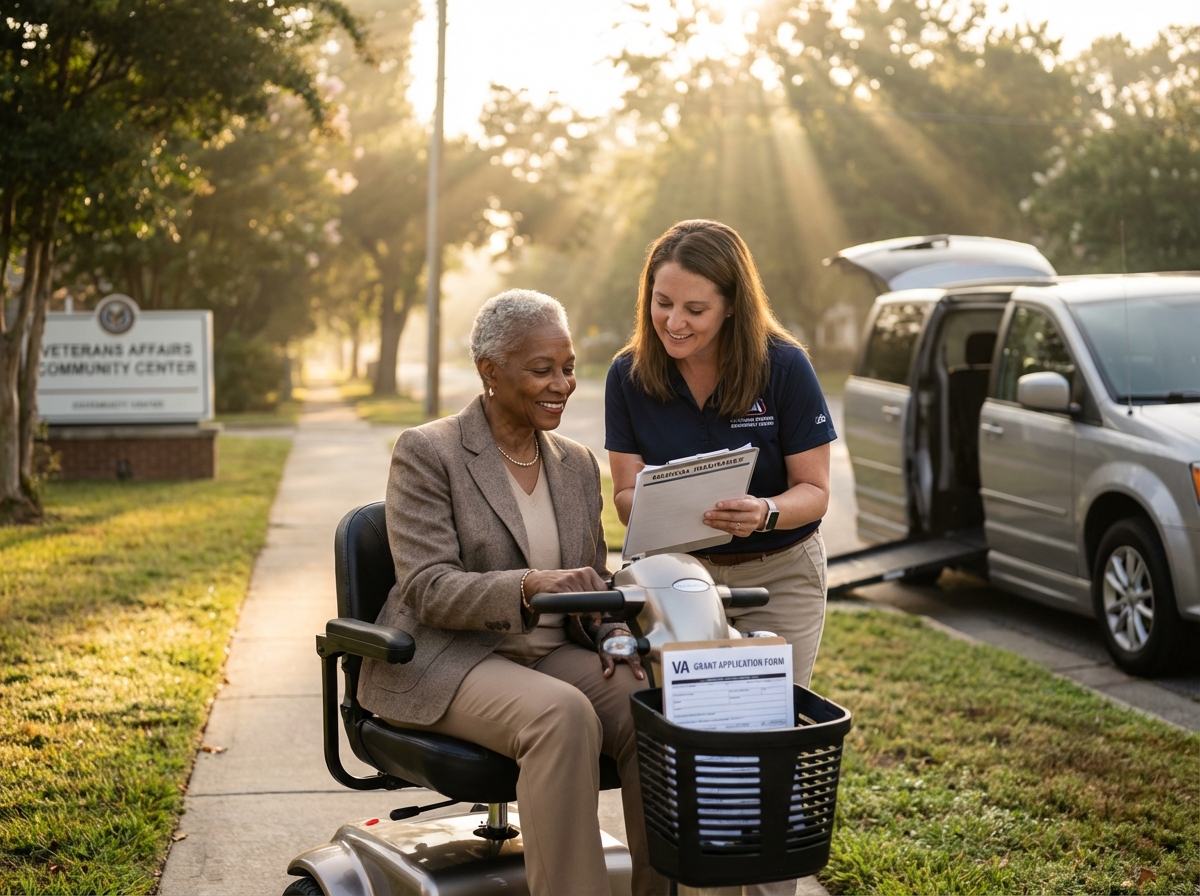
The Department of Veterans Affairs provides some of the most robust support for mobility equipment. Veterans who are enrolled in the VA health care system may be eligible for a scooter through the Prosthetic and Sensory Aids Service. Eligibility is not always tied to a service-connected disability. If a VA primary care provider determines that a scooter is necessary for your health and daily functioning, the VA will often provide it at no cost.
The VA usually requires an evaluation by a physical or occupational therapist. They will test your strength and coordination. They also provide training on how to operate the device safely. This is a critical step because Electric Scooter and Bike Accidents Are Soaring Across the U.S. and proper training reduces your risk of injury. The VA handles all maintenance and battery replacements for the life of the device. Additionally, you should ask about the “Automobile Adaptive Equipment” program if you need a lift to transport the scooter on your vehicle.
Private Insurance and Prior Authorization
Private health insurance policies often include a durable medical equipment benefit. The rules are usually similar to Medicare but can be more flexible regarding outdoor use. You will almost certainly need a letter of medical necessity from your doctor. Most private insurers require prior authorization. This means the insurance company must agree to pay before you purchase the scooter.
If you have a high-deductible plan, you might still have to pay a significant amount out of pocket. Check if your employer offers a Health Savings Account or a Flexible Spending Account. These funds can be used to pay for the portion of the scooter that insurance does not cover. Always ask your insurer for a list of “in-network” DME providers. If you go out of network, you might have to pay the full price upfront and wait for partial reimbursement.
State Assistive Technology Programs and Nonprofits
Every state has an Assistive Technology Act Program. These programs do not always give away free scooters, but they offer low-interest loans and equipment try-out centers. They are a great resource for finding local grants. Independent Living Centers are another vital resource. These are community-based organizations run by and for people with disabilities. They often have “loan closets” where you can borrow a scooter for a long period.
Area Agencies on Aging can help seniors find local funding sources. Some community-based nonprofits like Easterseals or the Muscular Dystrophy Association provide grants for specific diagnoses. You can also look for local civic groups like the Lions Club or the Knights of Columbus. These organizations often have small funds dedicated to helping neighbors buy medical equipment.
Donated and Used Equipment Options
If insurance is not an option, look for donated equipment. Many organizations collect used scooters, refurbish them, and give them to people in need. Look for “RE-USE” programs in your state. Websites like the AT3 Center can help you find these programs. When getting a used scooter, you must be careful about the battery. Lead-acid batteries often fail if they sit unused for months.
Safe sources for used scooters include reputable DME suppliers that sell refurbished units with a limited warranty. Avoid buying from random sellers on social media marketplaces unless you can bring someone along to inspect the motor and the frame. A faulty scooter can be a major safety hazard.
Rentals and Tax Implications
If you only need a scooter for short-term recovery or travel, renting is a viable option. Private rental companies usually do not apply rental payments toward the purchase price unless you have a specific “rent-to-own” contract. Renting is also a good way to test a specific model before committing to a purchase.
Financially, a mobility scooter is considered a deductible medical expense by the IRS if it is used primarily for medical care. You can deduct the cost of the scooter as well as the cost of repairs and batteries if your total medical costs exceed a certain percentage of your adjusted gross income (See IRS Publication 502). Always keep your prescription and receipts to justify the deduction.
Competitive Bidding and Supplier Rules
Medicare uses a competitive bidding program for DMEPOS suppliers. This means only certain suppliers in specific geographic areas are allowed to provide scooters to Medicare beneficiaries. You must check the Medicare website to find a “contract supplier” in your zip code. Dealing with an enrolled, reputable supplier is important because they handle the complex billing and documentation. They are also responsible for ensuring the equipment meets federal safety standards.
Practical Tips for Success
When you call an agency or insurance company, use specific language. Ask for the “Durable Medical Equipment department.” Ask about “medical necessity criteria for power mobility devices.” If you are told no, ask for the “appeals process” in writing.
Common pitfalls include failing to document that your home is accessible for a scooter. If your doctor’s notes do not mention that you have enough space to use the device indoors, the claim will be denied. Another mistake is buying the scooter first and asking for reimbursement later. Most programs will not pay retroactively.
The timeline for getting a scooter through insurance is usually 4 to 8 weeks. The VA can take a similar amount of time. Grants from nonprofits may take several months. You can combine sources by using a partial grant to cover the 20 percent co-pay that Medicare leaves behind. Always keep copies of every document you submit.
Preparing a Strong Medical and Financial Application
The success of your application for a mobility scooter depends on the quality of the paperwork you submit to your insurance provider or a grant committee. Most denials occur because the medical records lack specific details required by payers like Medicare or private insurers. You must treat this process as building a legal case for your physical independence. The documentation needs to prove that your mobility limitation is severe enough to prevent you from performing basic tasks inside your home. It must also show that less expensive equipment like a cane or a walker will not solve the problem.
The Medical Documentation Blueprint
Face-to-Face Physician Examination
You must schedule a specific appointment with your primary doctor to discuss your mobility needs. This cannot be part of a routine physical or an appointment for a different ailment. The clinical notes from this visit must explicitly state that the primary purpose of the encounter was a mobility evaluation. The doctor needs to document your history of falls, your current use of assistive devices, and why those devices are failing you now. If the notes are vague, the insurance company will likely reject the claim.
Mobility-Related Activities of Daily Living (MRADLs)
Payers focus on your ability to function within your residence. Your medical records must detail how your condition affects specific tasks. These include toileting, feeding, dressing, grooming, and bathing. You need to show that you cannot perform one or more of these activities safely or in a reasonable amount of time. If you can walk to the bathroom but it takes ten minutes and leaves you exhausted for the rest of the day, that should be documented as a functional limitation.
Physical or Occupational Therapy Evaluation
A therapist provides the objective data that insurers trust. They will perform a functional mobility assessment to measure your physical capabilities. This report should include your gait speed and the total distance you can walk without assistance. It should also note your balance, your muscle strength, and your range of motion. The therapist will explain why a manual wheelchair is not a viable option. For example, they might note that you lack the upper body strength to self-propel a manual chair or that you have a cardiac condition that makes such exertion dangerous.
Objective Measurements and Safety
The evaluation must include your height and weight to ensure the requested scooter model is appropriate for your frame. The doctor or therapist must also attest that you have the cognitive and physical ability to operate the device safely. This is a critical point because medical professionals are increasingly aware of the risks associated with power mobility. Recent data shows that electric scooter and bike accidents are soaring across the U.S., which makes the safety certification a mandatory part of the approval process. The provider must confirm you can steer, stop, and navigate your home environment without risking injury to yourself or others.
Sample Wording for Medical Necessity
Physician Order Language
The patient has a mobility limitation that significantly impairs their ability to participate in one or more mobility-related activities of daily living in the home. This limitation cannot be sufficiently resolved by the use of an appropriately fitted cane or walker. The patient has the mental and physical abilities to safely operate a power-operated vehicle. The patient’s home has adequate access and maneuvering space for the device requested.
Statement of Medical Necessity
I am prescribing a power-operated vehicle for this patient due to chronic osteoarthritis and severe respiratory distress upon exertion. The patient is unable to ambulate more than ten feet without a rest period of five minutes. A manual wheelchair is contraindicated due to bilateral rotator cuff tears. The use of a mobility scooter will allow the patient to perform essential grooming and meal preparation tasks independently within the home.
Working with DME Suppliers
The Role of the Supplier
Durable Medical Equipment (DME) suppliers act as the bridge between your doctor and your insurance company. You should choose a supplier that is enrolled in your insurance network. They will often help you gather the necessary forms and check them for errors before submission. You should ask the supplier for a checklist of their specific requirements. They will need a Written Order Prior to Delivery (WOPD) which must be signed by your doctor after the face-to-face exam is complete.
Prior Authorization and Paperwork
The supplier typically submits the prior authorization request to the insurer. This package includes the doctor’s notes, the therapist’s evaluation, and the detailed product description of the scooter. They may also include an Advance Written Order (AWO) which confirms that the doctor has reviewed the specific model and features. You should stay in frequent contact with the supplier to ensure they have received all documents from your doctor’s office. Delays often happen when a doctor’s office forgets to fax a single page of clinical notes.
Applying for Grants and Local Programs
Financial Documentation
Grant-making nonprofits and state programs have different requirements than insurance companies. They focus on your financial hardship. You will need to provide your most recent federal tax returns or a Social Security benefit verification letter. Many programs require proof of disability which can be a letter from your doctor or your Social Security Disability Insurance (SSDI) award letter. You may also need to provide a breakdown of your monthly household expenses to prove that you cannot afford the equipment on your own.
Identifying Local Opportunities
You can find local grants by contacting your state’s Assistive Technology Program or the local Area Agency on Aging. These organizations often maintain lists of community foundations that fund medical equipment. When you apply, emphasize how the scooter will improve your quality of life and your ability to remain in your home. Some grants are specific to certain diagnoses like Multiple Sclerosis or ALS. Others are general and based solely on income levels.
The Appeals Process
Handling a Denial
If your request is denied, read the denial letter carefully to understand the reason. If the reason is a lack of medical necessity, you can submit additional notes from your doctor. For Medicare, the first step is a redetermination. You must submit this request in writing within 120 days. If that is denied, you can move to a reconsideration by a Qualified Independent Contractor. Medicaid beneficiaries have the right to a fair hearing. This is a formal process where you can present your evidence to an administrative law judge. You should prepare for an appeal by asking your doctor to write a more detailed letter that addresses the specific concerns mentioned in the denial notice.
Timeline and Persistence
The approval process can take anywhere from a few weeks to several months. An initial insurance decision usually arrives within 30 days. If you have to appeal, the process can extend for another three to six months. You should keep a log of every phone call and every document you send. Persistence is often the deciding factor in getting an application approved. Working closely with your medical team and your equipment supplier will help you avoid common mistakes like missing signatures or outdated exam notes.
Choosing the Right Model and Practical Care Advice
Choosing a mobility scooter involves more than picking a color or a brand. You need a machine that fits your body and your daily routine. The first decision usually comes down to the number of wheels. 3-wheel models offer a tight turning radius. This makes them perfect for navigating narrow hallways or grocery store aisles. But they can feel less stable on uneven pavement. 4-wheel scooters provide a broader base. This extra wheel adds stability when you drive over grass or cracked sidewalks. If you plan to spend most of your time outdoors, a 4-wheel model is often the safer choice.
Matching Models to Your Lifestyle
Travel and Portable Scooters
These models are lightweight. They fold up or disassemble into a few pieces. They fit easily into a car trunk. The trade-off is a lower weight capacity and smaller batteries. They are best for short trips on smooth surfaces like malls or airports.
Heavy-Duty and Bariatric Scooters
These machines are built with reinforced frames. They support higher weight limits, often up to 500 pounds. They feature larger seats and stronger motors. They are essential for users who need extra room or power to climb hills.
Outdoor and Off-Road Models
If you live in a rural area, look for high ground clearance. These models have large, air-filled tires and advanced suspension systems. They handle gravel and dirt paths without bottoming out. They usually come with powerful lights for evening use.
Drive System Considerations
Rear-wheel drive is standard for most scooters because it provides good traction. Mid-wheel drive models are becoming popular for their incredible maneuverability. They can turn in place, which is a lifesaver in small apartments. You should also check the ground clearance. A low clearance of two inches might get stuck on a thick rug or a door threshold. Aim for three to four inches if you plan to go outside often.
Mastering Battery Care and Longevity
The battery is the heart of your scooter. Most models use Sealed Lead-Acid (SLA) batteries. They are reliable and affordable. However, many new high-end models now use Lithium-ion (Li-ion) technology. Lithium batteries are much lighter and last for more charge cycles. They also charge faster. Regardless of the type, you must follow a strict charging routine to avoid expensive replacements.
Charging and Storage
Charge your battery after every use, even if you only went a short distance. Never let the battery drain to zero percent. This causes permanent damage. If you plan to store the scooter for a long time, keep the battery in a cool, dry place. For SLA batteries, store them fully charged. For Lithium-ion, a 50 percent charge is better for long-term health. Extreme heat or cold will kill your range. If it is freezing outside, bring the battery indoors if possible.
Signs of Failure and Replacement Costs
Watch for a sudden drop in range. If your scooter used to go ten miles but now struggles after three, the battery is failing. Sluggishness on small inclines is another warning sign. When replacing batteries, always swap both at the same time. Using one old battery with one new battery will ruin the new one quickly.
If Medicare or insurance paid for your scooter, they will often pay for repairs after the manufacturer warranty expires. This includes the cost of labor and replacement parts like motors or tires. Batteries are usually covered once every twelve months if a technician documents that they no longer hold a charge. You must use a repair shop that is authorized by your insurance provider. If you paid for the scooter yourself, you are responsible for all maintenance and battery costs.
Maintenance and Safety Checklist
Regular checks prevent breakdowns and accidents. According to recent data, malfunctioning equipment is a leading cause of scooter injuries. Use the following table to stay on top of your machine’s health.
| Frequency | Component | What to Check |
|---|---|---|
| Daily | Battery | Ensure a full charge before leaving. |
| Daily | Tiller/Controls | Check that the throttle and brakes respond instantly. |
| Monthly | Tires | Look for cracks or bald spots. Check pressure if pneumatic. |
| Monthly | Electrical | Inspect the charger cord for frays or exposed wires. |
| Seasonal | Seat and Frame | Tighten any loose bolts. Check for rust or cracks. |
| Seasonal | Brakes | Test the electromagnetic brake on a slight incline. |
Safety on the Move
Visibility is your best defense. Add a tall orange flag and use your lights even during the day. Wear reflective clothing if you are out at dusk. When approaching a curb, always use a curb cut. Attempting to jump a curb can tip the scooter. Be mindful of pedestrians and keep your speed low on sidewalks. In wet weather, your stopping distance doubles. Avoid deep puddles as water can fry the motor controller. If you must go out in the rain, use a waterproof tiller cover to protect the electronics.
You do not need a driver’s license or vehicle registration to use a mobility scooter in the United States. The law treats these devices as extensions of the person, similar to a wheelchair. You are expected to follow pedestrian rules and stay on sidewalks. However, you should check your local city or town website for any specific ordinances regarding “Personal Mobility Devices” on public paths.
Transport and Loading
Loading a scooter into a vehicle requires the right tools. Manual ramps are affordable but require physical strength to push the scooter up. Electric lifts do the heavy lifting for you. Always use high-quality tie-down straps to secure the scooter to the vehicle floor. Never leave the scooter in neutral while it is being transported. The internal brakes must be engaged to prevent it from sliding during a sudden stop.
Essential Accessories
A few small additions make a big difference. Rearview mirrors are a must for safety. They let you see traffic without turning your head. A front basket or a rear bag helps you carry groceries without affecting the scooter’s balance. Avoid hanging heavy bags on the handlebars because this can interfere with steering. A simple phone holder is also useful for navigation. Keep a small first-aid kit and a basic tool set in your storage compartment for emergencies.
Final Takeaways and Next Steps
The path to obtaining a mobility scooter requires a methodical approach. You should start by scheduling a dedicated appointment with your primary care physician focused entirely on your mobility limitations within your home. This documentation is the foundation of any insurance claim. After your medical appointment, contact your insurance provider immediately to request a list of in-network suppliers and details on prior authorization.
Simultaneously, reach out to your state Assistive Technology Program or local Area Agency on Aging for guidance on local grants and loan closets. If you are a veteran, contact your local VA healthcare facility to begin the evaluation process. Persistence is the most important part of this journey; if your initial application is denied, request a written explanation and start the appeal process immediately.
Actionable Checklist for Mobility Success
Gather Identification and Insurance Cards
You will need your current photo ID. You will need all insurance cards including secondary or supplemental plans. Keep these in a dedicated folder for your applications.
Proof of Financial Status
Many grant programs require proof of income. You should have your most recent tax returns ready. You should have your Social Security award letters available. These documents prove your eligibility for low cost programs.
Detailed Medical Records
You need copies of your recent office visit notes. These notes must mention your mobility struggles. They should show a history of your condition and why it is worsening.
Physician Order with Specific Phrases
Your doctor should use phrases like “Patient requires a power mobility device to perform activities of daily living.” Another effective phrase is “Mobility deficit cannot be resolved with a cane or walker.” These specific words help satisfy insurance requirements.
Medicare Approved Supplier List
You should only work with reputable suppliers. You can find these on the official Medicare website. Working with an unapproved vendor can lead to unexpected bills.
Emergency Maintenance Kit
You should keep a small kit on your scooter. It should include a spare fuse. It should include a manual for the specific model. You should have the phone number for a local repair shop written down.
Safety Training Certification
You should look for local safety courses. Some senior centers offer these. Understanding how to navigate curbs and crowds is vital for your safety.
Application Tracking Log
You should write down every person you speak with. You should record the date and time of every call. This log is essential if you need to follow up on a delayed application.
Durable Medical Equipment Policy Copy
You should have a printed copy of your insurance benefits. This helps you understand your co pay responsibilities. It also outlines the criteria for replacement equipment.
Local Repair Shop Contact
You should identify a shop that services your specific brand. You should call them to see if they offer mobile repair services. Knowing who to call before a breakdown saves time.
References
- Electric Scooter and Bike Accidents Are Soaring Across the U.S. — 2022: 67,497 individual injuries and 5,310 hospitalizations. The following data represents injuries and hospitalizations from electric scooters …
- Reducing e-scooter injuries demands designing safer streets – Axios — By the numbers: E-scooter injuries in the U.S. rose by 80% to nearly 116,000 in 2024, according to ERideHero's 2025 Electric Scooter Accident …
- US e-scooter injuries treated in ERs rose 80% last year: report — More than 15% of injuries involved children, and over 18% of injuries involved the head, the report found. Published Sept. 5, 2025.
- E bike and e scooter crash data lagging across United States — E-bike and e-scooter accidents are on the rise. But the data, or lack thereof, may not be showing it. Neama Rahmani, President and CEO of …
- The Medical Minute: E-bike and e-scooter injuries are on the rise in … — At Penn State Health Children's Hospital, doctors have already treated more kids injured in e-scooter and e-bike accidents in 2025 than in the …
- The rise of electric scooter injuries: What the general pediatrician … — A study of the National Electronic Injury Surveillance System (NEISS) demonstrated a dramatic increase in age-adjusted e-scooter injury …
- Increased Safety and Fewer Accidents Reported in Electric Scooter … — Hospitals and emergency services report fewer cases of injuries like broken jaws, head trauma, and fatalities caused by electric scooter …
- Are e-scooters safe? What Injury data shows for 2025 — Are e-scooters safe? What Injury data shows for 2025 · 1. Road Hazards · 2. Malfunctioning Scooters · 3. Driver Negligence · 4. Poor Lighting & …
Legal Disclaimers & Brand Notices
The information provided in this article is for informational purposes only and does not constitute professional medical advice, diagnosis, or treatment. Always seek the advice of your physician or other qualified health provider with any questions you may have regarding a medical condition, physical limitations, or the use of durable medical equipment.
All product names, logos, and brands mentioned in this text are the property of their respective owners. All company, product, and service names used in this article are for identification purposes only. Use of these names, logos, and brands does not imply endorsement.