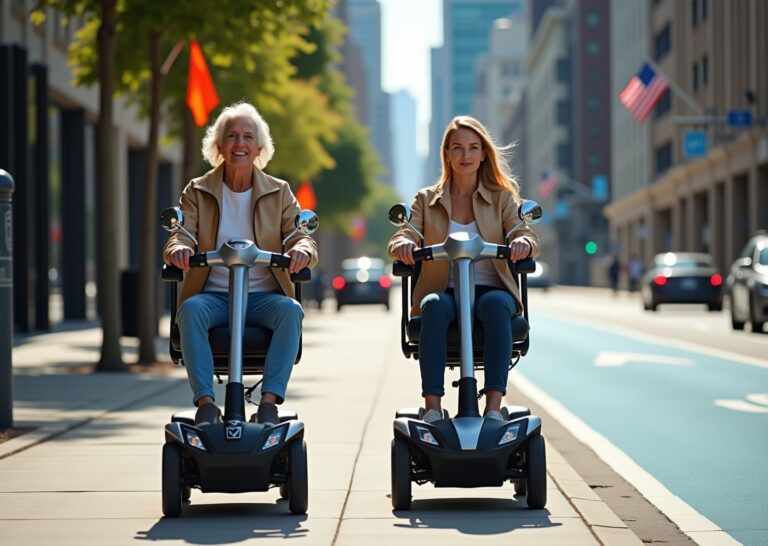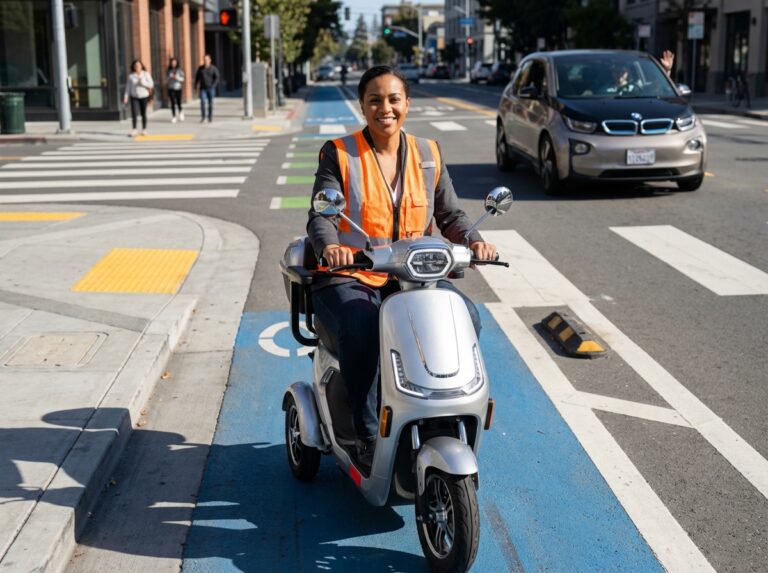
Discover how mobility scooter laws in the USA shape where you can ride — sidewalks, streets, and bike lanes — and how to stay safe and compliant. This guide covers federal frameworks and state variations, practical road and sidewalk rules, safety practices, battery care and maintenance, model selection, and top accessories to help riders and caregivers make informed, confident decisions.
Understanding mobility scooter types and the federal framework
Before we get into the specifics of riding on sidewalks or roads, it’s essential to understand what a mobility scooter is and the legal foundation that protects your right to use one. A mobility scooter isn’t a toy or a recreational vehicle. It’s a medical device designed to provide mobility to people with disabilities. This distinction is the key to understanding the laws that govern its use. Unlike electric scooters or e-bikes, which are often built for commuting or fun and can reach speeds of 20 mph or more, mobility scooters are classified as personal mobility devices. They typically have top speeds between 4 and 8 mph and are designed for safety and accessibility.
Understanding the Different Types of Scooters
Mobility scooters come in several shapes and sizes, and the type you use can influence where and how you can legally ride it. Knowing the categories helps you understand your scooter’s capabilities and limitations.
- Travel Scooters
These are the most compact and lightweight models. They are designed to be easily disassembled and transported in a car trunk, making them ideal for shopping trips or vacations. Their smaller size and shorter battery range mean they are best suited for smooth, flat surfaces like indoor spaces or paved sidewalks. - Full-Size Scooters
Larger and more robust, full-size scooters offer greater stability, higher weight capacities (often up to 500 pounds), and longer-lasting batteries. They are built for more extensive outdoor use and can handle varied terrain better than travel models. These are the workhorses for daily errands and community mobility. - Three-Wheel vs. Four-Wheel Models
The number of wheels affects performance. Three-wheel scooters have a much tighter turning radius, which is a huge advantage when navigating narrow store aisles or crowded indoor spaces. Four-wheel scooters, on the other hand, provide a wider base of support, making them significantly more stable on uneven ground, cracked sidewalks, or gentle slopes.
The Federal Framework: Your Right to Access Under the ADA
At the federal level, the most important piece of legislation for mobility scooter users is the Americans with Disabilities Act (ADA). The ADA doesn’t list specific scooter models but instead provides broad protections for people with disabilities using what it calls “Other Power-Driven Mobility Devices” (OPDMDs). This category includes mobility scooters. The ADA ensures that you can use your scooter in public spaces, such as government buildings, stores, parks, and pedestrian areas, unless the entity in charge can demonstrate that the device poses a legitimate safety risk that cannot be mitigated.
This federal protection is your baseline right to access. The U.S. Department of Justice provides extensive resources on how the ADA applies to mobility devices, and the U.S. Access Board offers guidance on creating accessible environments. You can find the official rules and explanations on the government’s ADA website. This is a critical resource to have bookmarked. For the most current guidance, always refer directly to ADA.gov.
Where Federal Law Ends and Local Rules Begin
While the ADA grants you the right to be in public spaces, it doesn’t dictate the specific rules of the road or sidewalk. This is the most common point of confusion. The federal government establishes your right to access, but it’s your state, county, or city that creates the detailed rules about how you operate your scooter. They decide things like speed limits on sidewalks, whether you can use a bike lane, and when it’s permissible to ride on the road.
This is why the laws can feel so inconsistent from one town to the next. One city might treat mobility scooters exactly like pedestrians, restricting them to sidewalks, while a neighboring town might have ordinances allowing them in bike lanes or on the shoulder of low-speed roads. Enforcement is also handled entirely at the local level.
The classification of your scooter can directly impact these local rules. For example, some jurisdictions may require scooters capable of speeds over 8 mph to have features like headlights, rear reflectors, or even turn signals if they are to be used on public roads. While registration and insurance are not federally required and are rare for mobility scooters, a few municipalities are exploring these requirements for faster, more “road-worthy” models. To ensure accuracy, riders should consult these primary sources:
- The official U.S. Department of Justice website at ADA.gov for federal accessibility rules.
- Their state’s Department of Motor Vehicles (DMV) or Department of Transportation (DOT) website for vehicle codes and statutes.
- Their city or county’s official website for local municipal codes, which often contain specific ordinances on sidewalk and road use.
Sidewalk use and local regulations
While federal law provides a broad framework for access, the specific rules for riding your mobility scooter on a sidewalk are almost always decided at the city or county level. This is the most important thing to remember. The general principle across the United States is that mobility scooters, as assistive devices, are permitted on sidewalks. But local ordinances can and do add specific restrictions. The question of scooter on sidewalk legality is answered in your town’s municipal code, not in a federal statute.
Common patterns emerge when you look at different local laws. Most places require you to operate your scooter as a pedestrian. This means you must always yield the right-of-way to people walking. Some municipalities set specific speed limits for sidewalks, often around 4 mph, which is a brisk walking pace. Age restrictions are less common for mobility scooters than for recreational e-scooters, but it’s still something to verify. The biggest challenge is navigating shared spaces. Conflicts with pedestrians are a real concern, especially on crowded or narrow sidewalks. A standard sidewalk must be at least 36 inches wide to be ADA compliant, but many older walkways are narrower, cracked, or lack proper curb cuts, making them difficult or unsafe to use. For your safety, riding on the sidewalk is almost always recommended over riding on the road, especially on streets with speed limits over 25 mph.
Finding the exact sidewalk scooter rules for your area requires a little bit of research, but it’s a straightforward process. Here is a step-by-step approach to get a definitive answer.
- Check Your Municipal Code Online.
Nearly every city and county posts its local ordinances online. Search for your city’s name plus “municipal code” or “ordinances.” Look for sections related to “traffic,” “pedestrians,” or “motorized vehicles.” This is the most direct source for local laws. - Contact City or County Offices.
If the code is unclear, call your local Department of Transportation or Public Works. Another excellent resource is your local Americans with Disabilities Act (ADA) Coordinator’s office. They can provide clarity on rules and report inaccessible sidewalks. You can find general guidance on mobility devices through federal resources like ADA.gov. - Consult State Statutes and DMV Guidance.
While less specific than city rules, your state’s vehicle code or Department of Motor Vehicles (DMV) website can define how mobility scooters are classified. This can help you understand if they are treated strictly as pedestrian devices or have other classifications.
How these rules play out depends heavily on your environment. In a dense urban downtown, you should expect to travel at a very slow speed, stay hyper-aware of pedestrians stepping out of shops, and use audible warnings sparingly. In a suburban neighborhood, sidewalks may be wider and less crowded, but you’ll need to watch for cars backing out of driveways and uneven pavement from tree roots. When visiting national parks, mobility scooters are generally allowed on paved trails and walkways accessible to pedestrians, but you should always check the specific park’s regulations on the National Park Service (NPS) website before you go.
State laws show just how much rules can differ. For example, Florida generally allows mobility scooters on sidewalks and even in bike lanes in some cases, treating them as “electric personal assistive mobility devices.” In contrast, New York City has some of the country’s most congested sidewalks, and enforcement heavily prioritizes pedestrian safety, making slow and cautious operation essential. In parts of Texas and California, if a sidewalk is unavailable or unusable, you may be permitted to ride on the shoulder of a low-speed road, but you must yield to everyone. These examples highlight why checking your local city’s code is non-negotiable.
Finally, good etiquette is as important as the law.
- Always travel at a speed that is safe for the conditions and number of people around you.
- Use a bell or a gentle verbal announcement like “excuse me” or “on your left” well before you pass someone.
- Watch for signs. A sign that says “No Motorized Vehicles” may or may not apply to a mobility scooter as an assistive device, which is another reason to clarify with local authorities.
By understanding the rules and riding with courtesy, you can ensure your trips are safe and stress-free for both you and those you share the sidewalk with.
Road and bike lane use rules and practical riding guidelines
While sidewalks are often the default path, there are specific situations where you might need to use a road or a bike lane. Understanding the rules for these spaces is critical for your safety and to ensure you’re riding legally. The laws are not uniform across the country; they depend heavily on how your state and city classify your device.
Understanding the Legal Lingo: How Your Scooter is Classified
State laws use specific terms to define mobility scooters, and this classification determines where you can legally ride. It’s the most important piece of the puzzle. Most often, scooters fall into one of these categories:
- Motorized Wheelchair or Personal Mobility Device (PMD): This is the most common classification. Under this definition, the scooter is seen as an extension of a pedestrian. This means you generally have the rights and responsibilities of a pedestrian and are expected to use sidewalks first. Road use is typically limited to crossing streets or when a sidewalk is unavailable or unsafe.
- Electric Personal Assistive Mobility Device (EPAMD): Some states, like Florida, use this term. It often provides more specific permissions, such as allowing use in bike lanes and on roads with lower speed limits (e.g., 25 mph or less), even if a sidewalk is present. These laws recognize that a scooter moves faster than walking speed and can integrate safely in certain traffic flows.
- Low-Speed Vehicle (LSV): This classification is less common for traditional mobility scooters but may apply to faster, larger, or enclosed models. If your device is classified as an LSV, it is treated more like a car. This means it may require a license, registration, and insurance, and it would be permitted on certain roads but prohibited from sidewalks and bike lanes.
How your scooter is classified directly impacts your right to use the road. A device treated as a “motorized wheelchair” is fundamentally a pedestrian aid, while an “EPAMD” has more flexible permissions. You can find your state’s definitions in its vehicle code, usually on the DMV website.
When Can You Ride on the Road?
The general rule in most states is that you should only ride your scooter on the road when a sidewalk is not available or is unusable. When road riding is permitted, it almost always comes with strict conditions. For more information on specific state regulations, you can check resources like Are Mobility Scooters Allowed on the Road in the US? which provides a good overview.
Key Roadway Restrictions to Know
Speed Limits and Road Types
You are typically restricted to roads with low speed limits, usually 25 mph or 30 mph. Riding on faster roads, highways, or interstates is universally prohibited and extremely dangerous.
Lane Positioning
When on the road, you must ride as far to the right side of the road as is safely possible. This keeps you out of the primary flow of traffic and makes you more predictable to drivers.
Interacting with Vehicles
You must obey all standard traffic laws, including stopping at stop signs and red lights. However, you should assume drivers do not see you. Always be defensive, make eye contact with drivers at intersections before proceeding, and give cars the right-of-way unless you are in a designated crosswalk with a walk signal.
Navigating Bike Lanes on Your Scooter
Whether you can use a bike lane depends entirely on local and state law. Some jurisdictions welcome scooters in bike lanes as a way to separate them from both pedestrians and faster vehicle traffic. Florida, for example, generally permits EPAMDs in marked bicycle lanes. In other areas, bike lanes are exclusively for human-powered bicycles and e-bikes, and scooters are forbidden. Always yield to cyclists, as they are typically moving much faster. Stay to the right of the bike lane to allow them to pass safely.
Smart Strategies and Legal Requirements
Riding on the road carries higher risks. Planning and preparation are essential.
Required Safety Gear for Road Use
Many states that permit road use also mandate specific safety equipment. This isn’t just a recommendation; it’s the law. Common requirements include a white front light and a red rear light or reflector, especially for riding at night or in low-visibility conditions. Some local ordinances may also require a high-visibility safety flag to make you more noticeable to drivers in larger vehicles.
Night Riding and Legal Liability
Riding at night on a road significantly increases your risk. If your state requires lights and reflectors for night riding and you don’t have them, you could be found partially or fully at fault in the event of an accident. This could affect any insurance claims or legal action. Beyond legal liability, riding without proper visibility gear at night is simply unsafe. Always ensure your lights are working and you are as visible as possible.
Verifying these rules before you ride is the best way to stay safe and avoid fines.
Safety equipment and rider best practices
Riding your mobility scooter confidently comes from knowing you’re prepared for whatever the journey brings. Beyond just knowing the rules of the road, true safety is about proactive habits, the right gear, and a rider-first mindset. It’s about making yourself visible and predictable to everyone you share a path with.
Essential Safety Gear for Every Ride
Being seen is your first line of defense. Many incidents happen simply because a driver, cyclist, or pedestrian didn’t see the scooter in time. Investing in good scooter visibility accessories is one of the smartest things you can do.
- Front and Rear Lights
A bright, white front headlight and a red rear taillight are non-negotiable, especially for riding at dawn, dusk, or at night. Some states, like Florida, legally require them for night use. Modern LED lights are bright, energy-efficient, and can make you visible from up to 500 feet away. - Reflective Gear
Think beyond the small reflectors that come with your scooter. Add reflective tape to the sides, front, and back of your scooter’s body. Wearing a reflective vest or jacket makes your entire upper body stand out, which is especially important at intersections. - High-Visibility Flag
A tall, brightly colored flag attached to the back of your scooter is a simple but incredibly effective tool. It raises the sightline for drivers of larger vehicles like SUVs and trucks, ensuring you are visible above the hood of their car when you’re in their blind spot. A height of five feet from the ground is recommended. - Mirrors
Rear-view mirrors are crucial for situational awareness, particularly if you plan to use bike lanes or road shoulders. They let you see cyclists or vehicles approaching from behind without having to turn your head, which could cause you to swerve. - Horn or Bell
A simple bell or an electronic horn helps you politely alert pedestrians you’re approaching from behind on a sidewalk or shared path. It prevents startling people and creates a more courteous environment for everyone. - Turn Indicators
If your scooter comes equipped with them, always use them. They clearly signal your intentions to others, reducing confusion at intersections or when maneuvering around obstacles.
Your Pre-Ride Safety Checklist
Just like a pilot does a walk-around before takeoff, a quick check before you ride can prevent a mechanical issue from turning into a safety problem. This should take less than two minutes. We suggest creating a small, laminated card with this list to keep in your scooter’s basket.
The Five-Point Pre-Ride Check
- Brakes
Engage the throttle lever slightly and then release it. The scooter should come to a smooth, quick stop. The electromagnetic brakes should engage automatically. - Tire Pressure
Visually inspect your tires. Do they look properly inflated? Press down on them firmly. They should feel solid, not spongy. Improperly inflated tires can affect handling and drain your battery faster. - Steering
Turn the tiller from side to side. It should move freely without sticking or making grinding noises. Ensure the tiller lock is fully disengaged. - Battery Charge
Check your battery meter. Make sure you have more than enough charge for your planned trip and a little extra for unexpected detours. Starting a trip with less than a 50% charge is risky. - Lights and Horn
Quickly test your headlight, taillight, and horn to ensure they are all working correctly.
Smart Riding Techniques for Different Conditions
How you ride is just as important as your equipment. Adjusting your speed and technique to your environment is a key skill.
Speed Management
Use your scooter’s speed dial wisely. On busy sidewalks with pedestrians, a walking pace of around 3-4 mph is appropriate. In open areas like parks or permitted bike lanes, you might increase it to 6-8 mph, but never go faster than you can safely stop. Avoid using the top speed setting in crowded areas.
Navigating Slopes and Pavement
When going up a slope, lean forward slightly to keep weight over the front wheels for better traction. When going down, keep your speed low and controlled. Be extra cautious on wet surfaces; reduce your speed significantly as your stopping distance will increase. Watch out for uneven pavement, large cracks, or loose gravel, as these can cause a loss of control. Slow down and navigate around them carefully.
Building Confidence Through Training
If you are new to using a mobility scooter, professional guidance can make a world of difference.
- Occupational Therapy (OT)
An OT can provide personalized training, assessing your specific needs and teaching you how to operate your scooter safely in various real-world scenarios. - Local Mobility Clinics and Retailers
Many durable medical equipment suppliers offer demonstrations and training sessions for new owners. - Caregiver Assistance
Caregivers can play a vital role by helping to plan safe, low-traffic routes for initial practice runs. Supervised practice in an empty parking lot or a quiet park can help a new rider build the skills and confidence needed for busier environments.
Legal and Social Responsibility
While federal law doesn’t mandate much, some state and local laws do have specific safety rules. For instance, some jurisdictions require helmets for riders under a certain age. Always check your local municipal code for equipment requirements.
Finally, remember that you are sharing space with others. Be courteous. Yield to pedestrians on sidewalks, give clear signals, and operate your scooter in a predictable manner. A friendly nod or a thank you goes a long way in fostering goodwill and ensuring a safe, pleasant ride for everyone.
Battery care maintenance and the best accessories for performance and comfort
Your scooter’s performance and reliability start with its power source. Understanding your battery is key to getting the most out of every ride. Most scooters use one of a few main battery types, each with its own set of trade-offs.
Understanding Your Mobility Scooter’s Battery
A scooter’s battery is its heart, and choosing the right one can make a huge difference in your daily freedom. When searching for the best scooter batteries, you’ll find these common options:
- Sealed Lead-Acid (SLA) & Gel Batteries: These are the workhorses of the mobility scooter world. They are affordable and reliable but also the heaviest option. An SLA or Gel battery typically offers 300-500 charge cycles and requires 8-10 hours to fully charge. Their weight can impact your scooter’s agility and portability.
- Lithium-ion (Li-ion) Batteries: This is the premium choice. Lithium-ion batteries are significantly lighter, often weighing less than half of their lead-acid counterparts. They offer over 1,000 charge cycles, charge much faster (usually in 4-6 hours), and provide a more consistent power output. The main drawback is the higher upfront cost, which can be double or triple that of an SLA battery.
A Practical Battery Care Plan
Proper care extends your battery’s life and ensures you don’t get stranded. Follow a consistent routine.
Charging Routines
Always charge your scooter’s battery after each use, even short trips. This is especially important for lead-acid and gel types, as letting them sit partially discharged can shorten their lifespan. Aim to charge them for a full 8-12 hours overnight. For lithium-ion batteries, you have more flexibility, but regular top-ups are still good practice. Never let any battery type drain completely, as this can cause permanent damage.
Storage and Seasonal Care
If you plan to store your scooter for more than a few weeks, especially during winter, prepare the battery properly. Store it with a charge between 40% and 60%. Keep it in a dry place where temperatures stay above freezing, ideally around 50°F. A cold, dead battery is often a permanently damaged one. Check the charge level monthly and top it up as needed.
Recognizing and Replacing a Failing Battery
You’ll know your battery is degrading when you see a significant drop in your scooter’s range. If a trip that used to take half your charge now uses three-quarters, it’s a clear sign. Other indicators include the battery case bulging or the scooter struggling to climb small inclines. When it’s time for a replacement, don’t just throw the old one away. Batteries contain hazardous materials. Look for local hazardous waste disposal sites or retailers that participate in recycling programs like Call2Recycle.
Your Mobility Scooter Maintenance Checklist
Regular maintenance prevents breakdowns and keeps your scooter safe.
Daily (Before Each Ride)
Check your tire pressure; properly inflated tires improve range and handling. Test your brakes to ensure they engage smoothly and firmly. Confirm your lights and horn are working.
Monthly
Wipe down electrical connectors to keep them free of dust and corrosion. Check all nuts and bolts on the seat and frame, tightening any that have come loose. Inspect your tires for wear and tear, looking for cracks or embedded objects.
Yearly
Schedule a professional service with a certified mobility technician. They can inspect the motor brushes, check the frame for stress fractures, and perform diagnostics that you can’t do at home. Using manufacturer-approved parts is crucial for maintaining your warranty and ensuring a perfect fit.
Essential Accessories for Safety and Comfort
The right mobility scooter accessories can transform your riding experience.
For Safety and Visibility
While not always legally required, some accessories are non-negotiable for safety. Rear-view mirrors are essential for awareness, especially if you plan to use bike lanes or cross roads. Bright LED lights for the front and rear make you visible in low-light conditions and are often mandated by local laws for any road use after dusk. A high-visibility flag can also make you more noticeable to drivers.
For Convenience and Comfort
A weatherproof basket or under-seat storage bag lets you carry groceries and personal items securely. For home access, a portable mobility scooter ramp helps navigate curbs and steps. If you spend a lot of time in your scooter, a high-quality gel or memory foam seat cushion can dramatically improve comfort. A simple phone mount keeps your navigation visible without distracting you from the path ahead. Finally, a durable scooter cover protects your investment from rain and sun when parked outside.
Frequently asked questions about mobility scooter laws and safety
Navigating the rules for mobility scooters can feel confusing, but understanding your rights and responsibilities is key to riding with confidence. Here are answers to some of the most common questions we hear from riders and their families.
Are mobility scooters allowed on sidewalks in my city?
Yes, in most cases. Under the federal Americans with Disabilities Act (ADA), mobility scooters are considered personal mobility devices, granting them access to pedestrian areas like sidewalks. However, local municipalities can impose restrictions, such as lower speed limits. You must always yield the right-of-way to pedestrians. Some crowded urban areas may have specific ordinances, so it’s always best to verify locally.
Next Step: Visit your city or town’s official website and search for “mobility scooter” or “personal mobility device” ordinances to find specific local rules.
How do I find my state’s specific rules for mobility scooters?
The best place to start is your state’s Department of Motor Vehicles (DMV) or Department of Transportation (DOT) website. Use search terms like “motorized wheelchair,” “electric personal assistive mobility device” (EPAMD), or “mobility scooter.” These official sites contain the state statutes that define what a mobility scooter is and where it can be legally operated.
Next Step: Perform an online search for “[Your State] DMV mobility scooter laws” to find the most direct official resource.
Can I ride my scooter in a bike lane?
This depends entirely on state and local law. Some states, like Florida, explicitly permit mobility devices in bike lanes. In many other areas, it is not allowed, as bike lanes are often adjacent to roads with higher speed limits, creating a dangerous speed difference between scooters and cyclists or cars. Never assume it’s okay.
Next Step: Contact your local transportation department directly to ask about their policy on using mobility scooters in bike lanes.
Do I need a driver’s license, registration, or insurance?
Federally, mobility scooters are not classified as motor vehicles, so no license or registration is required. Insurance is also not legally mandated. However, we strongly recommend getting a personal liability policy. This can protect you financially in case of an accident that causes injury or property damage.
Next Step: Speak with your home or renter’s insurance agent about adding a low-cost personal liability or “umbrella” policy for your scooter.
What speed limits apply to mobility scooters?
There are no national speed limits. A safe guideline is to travel at a walking pace (3-4 mph) on sidewalks and in stores. Most scooters have a top speed between 4 and 8 mph. While some local rules may set a specific sidewalk speed limit, the most important rule is to operate at a speed that is safe and courteous to those around you.
Next Step: Identify the speed control dial or switch on your scooter and practice adjusting it to match the flow of pedestrian traffic.
Is any safety gear legally required?
While helmets and high-visibility vests are always recommended, they are rarely legally required. The most common legal requirement, found in states like Florida and California, is the use of lights and reflectors when operating at night. As a best practice, having a full lighting kit is essential for safety after dusk, regardless of the law.
Next Step: If your scooter lacks them, purchase a set of bright, easy-to-install LED headlights and taillights.
How do federal ADA rules affect where I can ride?
The ADA is your strongest tool for access. It ensures that you can bring your scooter into any public accommodation, such as government buildings, restaurants, stores, and parks. The law views your scooter as a mobility aid, not a recreational vehicle, giving you the right to go where pedestrians can go. You can find detailed guidance at ADA.gov.
Next Step: If you feel a business or public entity has unfairly denied you access, contact your regional ADA Center for guidance and support.
What should I do after an accident?
Your first priority is safety. Check for injuries and call 911 if needed. If possible, move to a safe location. Exchange contact and insurance information with any other party involved. Always file a police report, as this official record is vital for any insurance claims or legal proceedings. Take photos of the scene and any damage.
Next Step: Store the non-emergency number for your local police department in your phone for easy access.
What scooter features are most important for road use?
If your local laws permit you to ride on the road, your scooter must be properly equipped. Essential features include a full lighting system (headlight, taillights, and turn signals), rear-view mirrors, and a horn. A high-visibility safety flag is also critical to ensure you are seen by drivers. Not all scooters come with these features, so you may need to add them. Check out this guide on road legality for more context.
Next Step: Consult with a certified mobility technician to determine if your scooter can be safely and legally equipped for road use.
How can I report unsafe sidewalks or request curb cuts?
You have the right to safe and accessible pathways. To report issues like large cracks, uneven pavement, or missing curb cuts, contact your city’s Public Works Department. You can also file a formal request or complaint with your local ADA Coordinator. Documenting the issue with clear photos and a precise location is very helpful.
Next Step: Find the name and contact information for your city’s ADA Coordinator on its official government website.
Final takeaways and recommended next steps
Navigating the world on your mobility scooter is about empowerment and independence. This freedom, however, is built on a foundation of understanding the rules and prioritizing safety. The most critical takeaway is the legal hierarchy that governs where and how you can ride. The federal Americans with Disabilities Act (ADA) provides the broad, essential right to access public accommodations. Think of the ADA as your master key, ensuring you can enter buildings, parks, and other public spaces. But the specific rules for the pathways connecting these places—the sidewalks, roads, and bike lanes—are almost always determined by state and local laws. What is permitted in Miami, Florida, might be restricted in Albany, New York. This local control means your first responsibility is to become an expert on the rules in your own community.
Beyond the laws, a safety-first mindset is non-negotiable. This isn’t just about avoiding tickets; it’s about protecting yourself and others. Your core safety priorities should always be visibility and predictability. You need to see and be seen. This means using lights, flags, and reflective materials, especially in low-light conditions. Ride at conservative speeds, always matching your pace to your environment. A crowded sidewalk requires a walking pace, while an empty bike path might allow for a bit more speed. Diligent maintenance is another pillar of safety. Regular pre-ride checks of your tires, brakes, and controls, combined with consistent battery care, prevent unexpected failures that could leave you stranded or cause an accident. Finally, your safety journey begins before you even turn the key. It starts with choosing the right scooter for your needs and environment and equipping it with accessories that enhance your visibility and comfort.
To help you put all this information into practice, here is a straightforward action plan to ensure every ride is a safe and confident one.
- Check Your Local Laws First. Before you ride, visit your city or county’s official website and your state’s Department of Motor Vehicles (DMV) page. Search for ordinances related to “mobility devices,” “electric personal assistive mobility devices” (EPAMDs), or “motorized wheelchairs.” This is the only way to know for sure where you can legally ride.
- Inspect Your Scooter Before Every Ride. Create a simple pre-ride checklist. Check your tire pressure, test your brakes, confirm your lights and horn are working, and ensure your battery has enough charge for your planned trip and a little extra.
- Plan Safe and Legal Routes. Use your knowledge of local laws to map out your trips. Prioritize routes with well-maintained sidewalks and designated bike lanes where permitted. Avoid busy roads or streets with speed limits over 25 mph unless your local laws explicitly allow it and your scooter is equipped for it.
- Consider Professional Training. If you are a new rider or feel unsure about handling your scooter in different environments, look for a mobility clinic or an occupational therapist who offers rider training. They can provide invaluable hands-on experience and safety coaching.
- Consult Local Accessibility Resources. Your local ADA coordinator or disability advocacy group can be a great resource for understanding your rights and reporting accessibility barriers like missing curb cuts or damaged sidewalks.
For more detailed information, these resources are your best next step:
- Your state’s DMV website is the primary source for vehicle codes and statutes related to mobility devices.
- The official ADA.gov website offers comprehensive guidance on your rights concerning mobility devices in public spaces.
- Local mobility equipment providers and occupational therapy clinics often have experts who can provide safety training and advice.
- Consumer protection websites can offer reviews and safety ratings for different scooter models and accessories.
If after all your research you still feel uncertain about a specific rule or situation, do not guess. Your safety is too important. Contact a local mobility specialist or your municipal transportation agency directly. A quick phone call can provide the clarity you need to ride with complete confidence and peace of mind.
References
- Are Mobility Scooters Allowed on the Road in the US? — Federal and State Regulations. In the US, federal law allows mobility scooters in public spaces, but road use is governed by state and local …
- Can You Drive a Mobility Scooter on the Road? – Blog — National Guidelines: Mobility Scooters Are Not Typically Road-Legal. In most U.S. states, mobility scooters are not classified as street-legal …
- Legal Guide: Can You Drive an Enclosed Mobility Scooter? — In general, enclosed mobility scooters are legal to use under federal law, but the specifics can vary depending on where you live.
- Is It Legal to Drive a Mobility Scooter on the Road? | AssistedLiving.org — In most cities in the United States, it's illegal to drive a mobility scooter on the road. Laws regarding the use of mobility scooters are typically developed …
- Mobility Devices – ADA.gov — State/local governments and businesses must allow a person with a disability who uses a wheelchair or other manually powered mobility aid into all areas where …
Legal Disclaimers & Brand Notices
This content is provided for informational and educational purposes only. It is not intended to be a substitute for professional medical advice, diagnosis, or treatment from a qualified healthcare provider, nor does it constitute legal advice regarding specific statutes, ordinances, or regulations.
Always seek the advice of a physician or other qualified health provider with any questions you may have regarding a medical condition or the safe use of a medical device, such as a mobility scooter. Consult a qualified legal professional or the official government resources (such as the ADA, DMV, or local municipal codes) for accurate and current information regarding specific state and local laws governing mobility device operation.
All product names, logos, and brands mentioned in this article are the property of their respective owners. Reference to any specific commercial products, processes, or services by trade name, trademark, manufacturer, or otherwise does not necessarily constitute or imply its endorsement, recommendation, or favoring by the publisher.