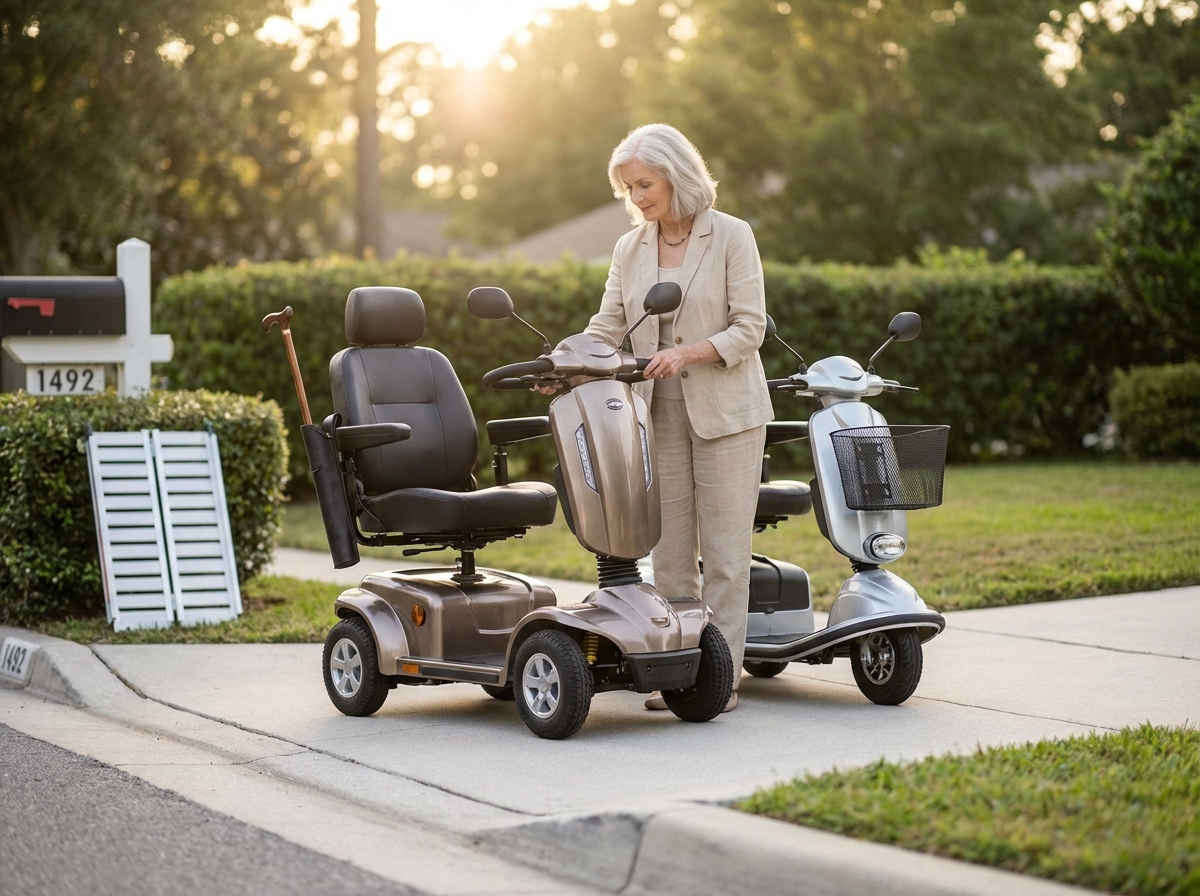
Choosing between a 3-wheel and 4-wheel mobility scooter affects safety, comfort, and daily independence. This guide compares design, stability, maneuverability, terrain capability, maintenance, and battery care, along with safety and road-rule considerations in the US. Read on for clear pros and cons, practical checklists, accessory recommendations, FAQs, and next steps to confidently choose and maintain the right scooter for your needs.
How 3-Wheel and 4-Wheel Scooters Differ
Mechanical Layout and Chassis Design
The structural difference between these two designs starts with the frame. A three-wheel mobility scooter uses a single wheel at the front, centered directly under the steering tiller. The two remaining wheels sit at the back to support the seat and motor, creating a triangular footprint. Most of these models use a front-wheel-drive system for light travel or a rear-wheel-drive transaxle for more power. The chassis is often narrower at the front to allow the wheel to turn at sharp angles. This layout reduces the amount of material used in the frame, making the scooter lighter for lifting into a vehicle.
Four-wheel scooters use a traditional rectangular layout with two wheels at the front and two at the back. This design requires a more complex steering linkage, as the tiller must move both front wheels simultaneously. Most four-wheel models use a rear-wheel-drive system, placing the motor and battery weight over the back axle. This setup provides better traction on slopes. The chassis is wider and more rigid than a three-wheel version; while this extra metal adds weight, it creates a significantly more stable platform for the rider.
Steering and Turning Radius
Turning radius is the most significant mechanical difference you will feel. A three-wheel scooter can pivot almost on its own axis. Because the single front wheel can turn nearly ninety degrees in either direction, the scooter needs very little space to make a full circle. This allows for precise navigation in tight spots like bathroom stalls, elevators, or narrow kitchen galleys.
Four-wheel scooters have a much larger turning radius. The two front wheels cannot turn as sharply because they would hit the frame or the floorboards, often requiring three-point turns in tight hallways. The wheelbase—the distance between the front and rear axles—is typically longer on a four-wheel model. While this improves ride quality and prevents the scooter from feeling jerky, it requires a wider area to turn around. This is a necessary trade-off for the increased stability the four wheels provide.
Stability and Center of Gravity
The center of gravity is the point where the weight of the scooter and the rider is balanced. On a three-wheel scooter, the stability zone is a triangle. If you turn too fast, the weight shifts toward the side of that triangle, creating a higher risk of tipping over. Riders must be careful when driving on side slopes or crossing a curb at an angle. These models are best suited for flat surfaces where the risk of unbalancing the machine is low.
Four-wheel scooters offer a square base of support, keeping the center of gravity well within the wheels even on uneven ground. This stability is vital if you plan to use the scooter on grass or gravel. It also helps when mounting or dismounting; the scooter will not tilt if you place all your weight on one side of the floorboard. This makes the four-wheel design the safer choice for people with significant balance issues.
Ground Clearance and Performance Specs
Ground clearance is the space between the bottom of the scooter and the ground. Many three-wheel models are designed for indoor use and sit low to the floor. This keeps the step-in height low but increases the risk of getting stuck on a door threshold. Four-wheel models often have higher ground clearance, allowing them to pass over small obstacles without bottoming out. You should check the local rules at Are Mobility Scooters Allowed On The Road In The US? to see where these higher-performance models can be driven.
| Specification | 3 Wheel Scooters | 4 Wheel Scooters |
|---|---|---|
| Typical Top Speed | 3 to 5 mph | 4 to 10 mph |
| Weight Capacity | 250 to 300 lbs | 300 to 500 lbs |
| Turning Radius | 28 to 35 inches | 40 to 60 inches |
| Battery Range | 8 to 15 miles | 10 to 30 miles |
| Ground Clearance | 1.5 to 2.5 inches | 2.5 to 5 inches |
Typical Use Cases
Three-wheel scooters are the primary choice for indoor environments. They excel in apartments and assisted living facilities and are popular for travel. Many models fold or disassemble into small pieces, making them easy to put in a car trunk. They are perfect for shopping trips where you need to navigate crowded aisles.
Four-wheel scooters are built for the outdoors, handling cracked sidewalks and park paths with ease. They are the standard for users who need to travel longer distances. These models often feature larger batteries and more comfortable seats. They are also the best option for bariatric users who require a higher weight capacity and a wider seat.
Pros and Cons Summary
Three Wheel Maneuverability
These models have a very small footprint. They offer more legroom for tall riders because there are no front wheel wells. They are generally lighter and easier to transport. However, they have a higher tipping risk on turns and uneven ground.
Four Wheel Stability
These scooters provide the most secure ride on all surfaces and handle higher speeds with less vibration. They offer better traction for climbing ramps. The main drawbacks are the larger turning radius and the increased overall weight of the machine.
Match Your Environment and Lifestyle to Scooter Design
Choosing between a three-wheel and a four-wheel scooter depends on where you spend your day. If your daily routine involves navigating a small apartment or a retirement community with narrow hallways, a three-wheel scooter is the logical choice. These models excel in tight indoor spaces because they have a much smaller turning radius. You can easily maneuver around furniture or turn around in a kitchen without needing a lot of floor space. In crowded stores, a three-wheel design allows you to navigate through clothing racks or tight checkout lanes with precision.
When you move outdoors, the requirements change. Sidewalks are rarely perfectly flat; they often have cracks, slopes, or uneven sections caused by tree roots. A four-wheel scooter provides the stability needed for these environments. The wider wheelbase prevents the scooter from tipping if you hit a bump at an angle. On gravel or grass, four-wheel scooters perform much better by distributing the weight of the rider across four points, preventing the wheels from digging into soft ground or slipping on loose stones.
Suspension and tire types significantly impact your comfort. Solid tires are made of hard rubber or plastic. They are great because they never go flat, but they offer very little cushioning, meaning you will feel every bump. These are best for indoor use or very smooth pavement. Pneumatic tires are filled with air and act like car tires, providing a much smoother ride on rough terrain. If you plan on long outdoor trips, look for a four-wheel model with pneumatic tires and a full suspension system to protect your joints from road vibration.
Seat height and weight capacity are often overlooked. A higher seat can make it easier to transition from standing to sitting, but it also raises your center of gravity, which can make a scooter feel less stable on uneven ground. Weight capacity is not just about the size of the rider; it also affects the performance of the motor. If you are close to the maximum weight limit, the scooter will struggle on hills and the battery will drain faster. Choosing a heavy-duty four-wheel model ensures the motor has enough power for your needs.
The Americans with Disabilities Act provides guidelines on where these devices can be used. You can find more information on the ADA.gov website regarding your rights in public spaces.
| Feature | Three Wheel Scooter | Four Wheel Scooter |
|---|---|---|
| Turning Radius | Excellent for tight corners | Requires more space to turn |
| Stability | Lower on uneven ground | High on all terrains |
| Leg Room | More space for stretching legs | Limited by two front wheel wells |
| Weight | Usually lighter and portable | Heavier and more rugged |
| Best Use | Indoors, malls, apartments | Parks, gravel, steep ramps |
Typical Travel Distance
If you plan to travel several miles daily, a four-wheel scooter with a larger battery and pneumatic tires is the better choice. Short trips around the house or a local mall favor the lighter three-wheel design. Consider how often you will be away from a charging port.
Home Access and Storage
Measure your doorways and any ramps at your home. A three-wheel scooter fits through narrow entries more easily. If you have a small storage closet, the compact footprint of a three-wheel model is a benefit. Four-wheel models often require a dedicated garage space or a large entryway.
Transportation Needs
If you travel by car, think about how the scooter will fit in your vehicle. Many three-wheel scooters are designed to be taken apart into lightweight pieces, making them easier for a single person to manage. Four-wheel scooters are often heavier and might require a specialized vehicle lift or a large SUV trunk.
Physical Strength and Balance
Your own physical abilities play a role. If you have difficulty with balance, the four-wheel model provides a more secure platform for getting on and off. If you have limited leg strength, a three-wheel scooter offers more room to position your feet comfortably without hitting the wheel wells.
Terrain Variety
Think about the roughest surface you encounter weekly. If you must cross a gravel driveway or a grassy park to reach your destination, the three-wheel model will likely struggle. The four-wheel design handles these transitions without losing momentum or risking a tip-over.
Safety, Maintenance, and Battery Care
Staying safe on a mobility scooter begins with a routine check before every trip. This habit prevents most mechanical issues while you are away from home. Walk around the machine to inspect the tires for flat spots or embedded debris. Test the brakes in a clear area to ensure they engage smoothly. If your model includes a seatbelt, click it into place. Check the horn and all lights; this is vital for afternoon trips when visibility drops quickly. Anti-tip wheels are a major safety feature for three-wheel models—ensure they are clear of mud or obstructions.
When you are driving, keep your speed at a walking pace in crowded areas, as pedestrians often change direction without looking. Approach curbs and ramps at a 90-degree angle; driving over an incline at a slant can cause the scooter to tip. If you must travel at night, use reflectors on the front and back of the seat. Bright clothing helps other drivers see you from a distance.
Legal Context in the United States
Rules for mobility scooters vary by state and city. Most areas in the US classify these devices as pedestrian aids, meaning you generally follow the same rules as people walking. You should stay on the sidewalk whenever possible. If a sidewalk is blocked or missing, stay as far to the right of the road as you can. Always use crosswalks and obey pedestrian signals.
Some cities have specific codes for enclosed scooters or high-speed models, which might require registration or liability insurance. It is smart to contact your local DMV or city code office to ask about specific requirements in your zip code. You can find more context on these regulations at Are Mobility Scooters Allowed On The Road In The US?.
Battery Care and Longevity
Battery health dictates how much freedom you have each day. Most scooters use lead-acid or lithium-ion batteries. Lead-acid batteries are the traditional choice; they are reliable but heavy. Lithium-ion batteries are becoming the standard for newer models, offering a longer lifespan and weighing much less.
Never let your battery drain completely. This deep discharge damages the internal cells. Charge the scooter after every trip, even if you only went a short distance. If you store the scooter for winter, keep the battery charge around 50 percent. Extreme heat or cold will shorten the life of the battery, so store the device in a climate-controlled area if you can. Most lead-acid batteries last one to two years with regular use, while lithium models may last longer. If the scooter feels sluggish on hills or the battery gauge drops fast, it is time for a replacement.
Maintenance Checklist
Preventative maintenance reduces the risk of a breakdown and extends the life of the motor.
Daily Tasks
Wipe down the seat and tiller. Check the battery gauge before leaving. Ensure the charging port is free of dust.
Weekly Tasks
Check tire pressure if you have pneumatic tires. Look for cracks in the plastic shroud. Test the swivel seat mechanism to ensure it locks firmly. Clean the scooter with a damp cloth—do not use a hose, as water can damage the electronics.
Monthly Tasks
Clean the battery terminals to prevent corrosion (look for white powder). Check the tightness of the armrests. Inspect the underside for loose wires or debris caught in the axles.
Annual Service
Schedule a professional inspection. A technician can check the motor brushes and the transaxle. They will also test the battery capacity with specialized tools.
Accessories for Safety and Convenience
Accessories turn a basic machine into a custom tool for your lifestyle.
Rearview Mirrors
These allow you to monitor surroundings without straining your neck. They are a top safety pick for driving in busy areas.
Swing Away Armrests
These make getting in and out of the seat much easier. They are helpful for people with limited hip mobility.
Canopies and Weather Covers
A canopy protects you from direct sun. A weather cover keeps the electronics dry if you get caught in a light rain.
Baskets and Cargo Bags
Groceries or personal items should never hang from the handlebars, as this affects steering and stability. Use a rear basket or an under-seat bag instead.
Phone Mounts
A mount allows you to use GPS navigation without holding your device, keeping your hands securely on the controls.
Medical Holders
Specialized clips can hold oxygen tanks or canes. These keep your medical essentials secure and within reach.
Ramps and Vehicle Lifts
Portable ramps help you navigate high door thresholds at home. A vehicle lift is necessary if you plan to transport a heavy four-wheel scooter by car. These tools reduce the physical strain of moving the device. You can learn more about where these devices are permitted at Mobility Devices – ADA.gov.
Frequently Asked Questions
How can I minimize the risk of my scooter tipping over?
The best way to reduce tipping risk is to slow down before you start any turn. This is especially important for three-wheel models. Always keep your body centered in the seat and avoid leaning far to one side. When you encounter a curb or a ramp, approach it straight on rather than at an angle. Most modern scooters come with rear anti-tip wheels; check these regularly to ensure they are not damaged or blocked by debris. Never exceed the manufacturer’s recommended incline rating for your specific model.
Do mobility scooters require registration or insurance in the US?
Standard mobility scooters do not require a driver’s license, registration, or license plates in most states, as they are not classified as motor vehicles. However, some high-speed or enclosed models might have different requirements depending on your city. While insurance is not mandatory, it is highly recommended. Many homeowners insurance policies can be extended to cover theft or damage. You might also consider liability insurance to protect yourself in case of an accident. It is wise to consult a local dealer or your city code office for binding legal policies in your area.
How long do batteries last and what is the replacement cost?
The lifespan of your battery depends on the type and how often you charge it. Sealed lead-acid batteries usually last between one and two years. Lithium-ion batteries are more expensive but can last three to five years with proper care. You can expect to pay between one hundred and three hundred dollars for a set of lead-acid batteries. Lithium replacements often range from four hundred to over eight hundred dollars. To get the most life out of them, charge your scooter after every use and avoid letting the battery drain completely.
What are the rules for traveling with a scooter on an airplane?
You can travel with your mobility scooter on most airlines under the Americans with Disabilities Act. You must notify the airline at least forty-eight hours before your flight. TSA and FAA have specific rules for batteries. Non-spillable lead-acid batteries are usually accepted in the cargo hold. Lithium batteries have strict Watt-hour limits and often must be removed and carried into the cabin. You should always check the latest ADA mobility device info and your specific airline’s policy before heading to the airport.
How do I transport a mobility scooter in a personal car?
Transporting a scooter depends on the model you choose. Travel scooters are designed to fold or disassemble into several lightweight pieces that fit in a standard trunk. For larger, non-folding models, you will need a vehicle lift. These can be hitch-mounted platforms on the back of a car or hoists that lift the scooter into a van or SUV. Always check your vehicle’s tongue weight capacity (often requiring a Class III hitch) before installing a lift. Portable ramps are another option if you have a large enough cargo area and can safely guide the scooter up the incline.
What is a safe speed for driving in different environments?
Most mobility scooters have a top speed between four and eight miles per hour. On a crowded sidewalk, you should keep your speed around two or three miles per hour to match a walking pace. This prevents accidents with pedestrians. You can use higher speeds on open paved paths or private property. If you are using a high-speed model on a residential street where permitted, stay alert for cars. Always reduce your speed significantly when driving on wet surfaces or through tight indoor spaces to maintain full control.
Actionable Buying Checklist
Step One: List Priorities
Write down where you will go. Measure your front door and the narrowest hallway in your home. Decide if you need to go on grass or gravel. This list will clarify if you need the tight turning radius of a three-wheel model or the stability of a four-wheel model.
Step Two: Test Ride Models
Visit a dealer and try at least two different models. Make sure they have the same seat style. Sit in them for ten minutes to check comfort. Check if the controls are easy to reach. Drive them over a small bump to feel the suspension differences.
Step Three: Measure Constraints
Measure your car trunk and compare it to the folded size of the scooter. Choose your battery type based on your budget and travel plans—Lithium is better for travel and longevity, while AGM (lead-acid) is better for a budget.
Step Four: Dealer Demonstration
Ask the dealer to show you how to charge the battery and disassemble the unit. Try to do it yourself while they watch. This ensures you know how to manage the device at home.
Step Five: Set the Calendar
Buy your safety gear, such as a flag and weather cover. Mark your calendar for a six-month checkup. Set a daily reminder to plug in the charger to start good habits early.
Resources for Safe Operation
Understanding the rules is essential for safety. In the United States, scooters are often treated as pedestrians. You should stay on the sidewalk whenever possible. If there is no sidewalk, you might be allowed on the road. You can find more details at Reyhee regarding road use. Always check with your local police department, as they know the specific municipal codes for your town. Some cities require a permit for large scooters, while others have speed limits for sidewalks. You can also read the Paiseec guide for general rules. For technical help, find a certified repair shop near you; they have the tools to fix motors and electronics. Local mobility dealers are also great resources, often hosting safety classes and helping you adjust your seat for the best posture.
References
- Are Mobility Scooters Allowed On The Road In The US? – Reyhee — Generally, mobility scooters are not classified as vehicles, so they are often not allowed on major roads or highways. However, they can usually be used on …
- Are Mobility Scooters Allowed on the Road? – Paiseec — Yes, in the United States, electric scooters are generally allowed on sidewalks, walkways, and local streets, but there are some important rules to follow.
- Can You Drive a Mobility Scooter on the Road? – Blog — In most US states, mobility scooters are not classified as street-legal vehicles. They're treated as assistive devices for pedestrian use, much like …
- The Ultimate Guide to U.S. Mobility Scooter Laws [2024]: Navigating th — Scooters cannot be ridden on sidewalks and must be operated in bike lanes or on roads with a speed limit of 25 mph or less. Electric scooters …
- Is It Legal to Drive a Mobility Scooter on the Road? | AssistedLiving.org — In most cities in the United States, it's illegal to drive a mobility scooter on the road. Laws regarding the use of mobility scooters are typically developed …
- Legal Guide: Can You Drive an Enclosed Mobility Scooter? — In some areas, enclosed scooters may need to be registered for road use, meet specific safety standards, or require liability insurance. Users …
- Where am I allowed to use my mobility scooter? The rules explained. — The main mobility scooter regulation is that they should only be used in a public space if you have been medically advised to or if you have a physical …
- Are Mobility Scooters Allowed on the Road? – dashmoto — Mobility scooter road laws typically allow you to ride on the road only if there's no safe sidewalk or alternative path available. If a sidewalk …
- Mobility Devices – ADA.gov — Information about the rights of people with disabilities who use mobility devices such as walkers, wheelchairs, or other power-driven devices to get around.
EMPTY